The Weekend My Son Invited Me To Stay, Then Sent A Bill For A Roadside Hotel, I Quietly Opened A Dusty Folder And Discovered Exactly What My Husband Had Prepared For Me Many Years Earlier
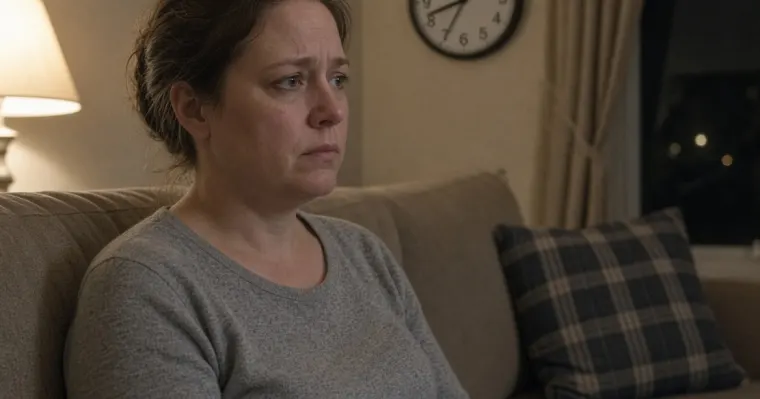
The message reached my phone at eight fifty-two on a Wednesday morning, while I was standing at the kitchen counter with a dish towel on my shoulder, my late husband’s reading glasses pushed up into my gray hair, and a packet of sunflower seeds spilled open beside my coffee. I almost did not look at it. I had planned the day around the garden, a little weeding before the heat came, a little talking to the tomato plants the way Gerald used to. But the screen lit up with my son’s name, and I read what he had written with the same quiet attention I once gave to the report cards he brought home. Here was my share for the weekend, he said. Three hundred ninety-five dollars. Venmo was easiest, but a check would also work. Beneath the words sat a photograph of a hotel bill, two nights at a Holiday Inn Express beside the interstate, a parking fee for a car I had not moved once, and a resort fee charged by a building that had never in its life been a resort. Kevin had circled the total in red ink, the way a teacher circles a wrong answer. I read it twice. Then I set the phone down very gently, as though it were something that might spill. Ten days earlier, that same son had called me on a Sunday evening and said, in a warm and easy voice, “Mom, we want you there for Caleb’s graduation. Come stay the whole weekend.” He had used the word stay. I remember being moved by it, standing in this same kitchen, smiling at nothing. My name is Louise Carver, though only the very old friends still say Lou. I am sixty-nine years old, and Gerald died three years ago, after forty-four years of marriage, on a morning so ordinary that I had already set out two cups.
Gerald was a land surveyor, and he carried the habits of the trade into everything. He walked into rooms and noticed which wall was out of square. He could not pass a crooked fence without shaking his head and saying, with real sorrow, “Lou, a line you don’t record is just a wish.” I used to tease him that he would put the phrase on his headstone. Standing there beside the chipped green mug I had owned since 1991, with the coffee going cold and the little brown seeds scattered across the counter, I finally understood what he had been trying to teach me for forty-four years. I had driven two hours to watch my only grandson walk across a stage. I had made the cheesy hash brown casserole that everyone in the family always asked for, and I had carried it on my lap in the yellow dish with the little chip along the rim, wrapped in a towel to keep it warm. When I pulled into Kevin’s driveway, his wife Melissa opened the front door before I could knock and stood with her arms folded across her chest. “The guest room is taken,” she said. “My sister and her children are staying here.” I waited, thinking that surely the next sentence would tell me where I was supposed to sleep. Instead she added, with a bright, hard smile, “We booked you somewhere really nice. It’s easier this way.” The hotel sat at an interstate exit between a gas station and a shuttered furniture warehouse, and the carpet in the hallway smelled like a wet dog. At the graduation, I was seated three rows behind Melissa’s parents, because the front seats had been reserved for the family, and I had apparently not been counted. At the party afterward, I stood at the edge of the lawn with a glass of lemonade, watching Melissa’s relatives settle into the patio furniture and pass around my casserole as if it had appeared on its own. When it was time for me to leave, Kevin gave me a quick hug and said, “Thanks for coming all this way, Mom.” Now, three days later, he wanted me to pay for the privilege.
I did not call him. I did not type an angry reply, and I did not cry. I turned the phone facedown, rinsed my mug, and looked out the window at the garden that Gerald and I had planted together during our first spring in this house, the rows of peonies and the ragged border of marigolds that he swore would keep the rabbits away. Something quiet settled in me, the way silt settles in a jar of pond water when you leave it alone. The hotel bill was not the beginning of anything. It was only the first time I had stopped pretending that the other moments were unrelated. The Thanksgiving after Gerald died, I had offered to host dinner, as I had every year of my marriage. Kevin said it would be easier at his house, because of “everything I was going through.” Then he asked me to bring the turkey and cover the wine, because money was tight that month, and I agreed, because I told myself that he was grieving too. There was also the matter of the lake house. Gerald and I bought that little property on Harlan Lake in 2001, with two bedrooms, a screened porch that smelled of cedar, and a narrow dock that always needed one more board replaced. He surveyed every boundary himself and drove the pins into the ground with his own two hands, one at each corner, whistling through his teeth. After he died, I let Kevin’s family use it in the summers. Caleb and Hannah loved the water, and I loved knowing that they were happy there. At first Kevin asked, “Can we use the lake house?” Then, over time, he began to say, “We’re heading up to the lake.” Eventually Melissa started calling it “our lake place.” I heard the word. I let it pass. Correcting your grown son over dinner feels small and petty when you have spent your entire life making room for him.
A month or so after that, I found a strange charge on my bank statement. One hundred eighty-seven dollars at Pruitt Lumber, a store near the lake that I had never set foot in. I circled it with a pencil, meaning to call the bank, and then I told myself that I had probably forgotten something. You are getting older, Louise, I said. Maybe you ordered supplies. Maybe it was a mistake. I folded the statement into a drawer and let it go, the way a person lets go of a bad feeling at the edge of sleep. But after the hotel bill arrived, that old charge no longer looked like a mistake. It looked like practice. That night I woke at three in the morning with my heart thumping, and I went downstairs in Gerald’s flannel robe, the one that still smelled faintly of cedar and pipe tobacco, though he had given up the pipe in 1994. I did not turn on the lights. In the sewing room, I opened the deep bottom drawer of his old desk, the one he kept locked and I never asked about. His surveying notebooks lay in tidy rows, their covers soft with years of rain and pockets. Beneath them rested a thick folder labeled in his square block handwriting, Harlan Lake. I made a pot of tea and carried the folder to the kitchen table, where the porch light threw a pale square across the wood. The original deed was folded in thirds. Gerald T. Carver and Louise M. Carver, husband and wife. Behind it was a second document that I had signed during the foggy, terrible year after he died, with a pen that someone put in my hand. The lake house belonged to a living trust. I was the surviving trustee, with full authority for as long as I lived. There was no mortgage, no co-owner, and no claim belonging to Kevin or Melissa. Clipped to the corner of the folder was a note in Gerald’s hand. Talked to Arthur about updating the trust. Lou should decide who, not Kevin alone.
Arthur Penn had been our estate attorney for more than twenty-five years, and I had not spoken to him since the funeral. I sat alone with the deed spread in front of me and understood something that I had been refusing to see. For years Kevin and Melissa had talked about the lake house as though ownership could be created simply by saying a thing often enough. But my name was on the paper. The deciding was still mine. In the morning I called Arthur’s office, and his assistant said he could see me on Friday afternoon. I told no one. Arthur’s office was upstairs over the old bakery on Elm Street, and the same four stairs still creaked beneath my shoes, the same little brass bell still jingled when I opened the door. He listened without once interrupting while I told him about the hotel bill, the lake house, the lumber charge, and the slow way my family had begun to treat my generosity as a permanent arrangement. When I finished, he took off his glasses and asked me a single question. “Louise, did you ever give Kevin power of attorney?” I remembered signing something years earlier, after Gerald’s heart scare, and Arthur pulled an old file from his cabinet and set it before me. My own signature sat at the bottom, a younger and more trusting hand. Kevin was named as my financial power of attorney in the event that I could not manage my own affairs, and he was also named as successor trustee. If anything happened to me, he would immediately control the lake house and several of my accounts. Arthur slid another page forward. “Gerald came to see me two years before he died,” he said. “He was worried.” “About Kevin?” “He never accused him of anything. He only said that you had spent your whole life giving people the benefit of the doubt, and he wanted you to understand that you still had choices.” I looked at my signature for a long time. I had trusted my son. But trust did not require me to leave every door unlocked forever. “Tell me every option,” I said. “And let me read every page.” So Arthur drafted a revocation of the power of attorney, and I read each line aloud before signing. Then we called my bank. Kevin was not a co-owner of my checking account, but he had been given online access when he helped me set up electronic banking after Gerald died, so he could see my balance, view every transaction, and make certain payments. A bank manager reviewed the recent charges, and in a careful voice she said, “Pruitt Lumber, one hundred eighty-seven dollars.” I closed my eyes. Dock boards. My son had used my account to repair the dock at the lake house he had already begun calling his. The sum hardly mattered. What mattered was the assumption beneath it, that my money was available, and that my memory was weak enough to protect him. “Remove his access today,” I said. “New login. New questions. Everything.” By the end of the afternoon only my name could open my account, Kevin was no longer my power of attorney, and Fairview Trust, a neutral company with no stake in my family, had replaced him as successor trustee. The lake house would eventually be held in equal shares for Caleb and Hannah, protected until they were old enough to receive it, with nothing passing through Kevin’s hands. Before I left, Arthur set a white envelope on the desk. My name was written across it in Gerald’s handwriting. “Your husband asked me to give you this,” he said, “but only if you came by yourself and made a decision of your own.” I carried it home unopened, sat at the table where Gerald and I had eaten thirty-eight years of ordinary dinners, and slit the seal with a butter knife. His letter began by saying that if Arthur had given it to me, then somebody had finally mistaken all the room I made for them as proof that nothing belonged to me. My hands started to shake. I kept reading. And by the time I reached the final paragraph, I knew exactly what address I would soon write on the change-of-address card I planned to mail my son.
Also readJust twelve hours after I donated 60% of my liver to save my sister’s 10-year-old son, she sat on my husband’s lap inside my VIP suite at Mount Sinai and kissed him. “You deserve to know,” she said. “He’s Leo’s real father.” My mother patted her shoulder and looked down at me. “At least your organ is keeping the true bloodline of this family alive.” Then my husband dropped divorce papers and a $5,000 check onto the bandages covering my incision. Minutes later, the Chief of Surgery walked in holding the genetic compatibility report. He looked at Marcus with something close to pity. “Before you sign anything, you need to read page three.” Then he paused. “You’ve been…”
The address I wrote was the lake house. That was what Gerald’s letter had told me to do, though not in so many words, and I will tell you what it said, because it has become the part of the story that I carry with me. He wrote in pencil, on three sheets of the yellow paper he used for field notes, in the careful block print of a man who spent his life measuring things that could not argue back. He said he had asked Arthur to keep the letter until I came on my own, because he was not sure I would ever do it otherwise. “You have given away more than you have kept,” he wrote, “and you have called it love so many times that you have stopped noticing the difference between love and permission.” He said he had watched Kevin grow into a man who was kind to people who could do something for him, and that he blamed himself for part of it, for the way he had let a boy believe that any room would be made for him. Then, on the second sheet, he told me about something I had never known. In the spring before he died, he had winterized the lake house, replaced the old furnace, and put in a wood stove, so that the place could be lived in all twelve months of the year. He had done the work himself, over weekends I had assumed he spent fishing. “I want you to have somewhere that is entirely yours,” the letter said, “where nobody has to be invited, and nobody has to be asked. If the day comes when you need to leave the house on Willow Street, you will have a door that opens only for you.” The last paragraph was the one that undid me. It said that the pins at the four corners of the lot were set where he had set them, and that a line he had recorded was no longer a wish. It was a fact, and I was allowed to stand on it.
I did not rush. That is the part I am proudest of, because for most of my life I would have rushed, calling Kevin, apologizing, arguing, asking for the version of the story in which I was not hurt. Instead, I spent three weeks making ordinary preparations. I drove to the lake house on a Tuesday in early June with my own key, a bag of groceries, and a pair of gardening gloves, and for the first time in three years I did not feel like a guest. The screened porch smelled of cedar and lake water. The new wood stove sat in the corner like a quiet, sturdy friend. The dock, with its fresh boards from Pruitt Lumber, looked sound and bright, and I stood at the end of it for a long while with my shoes in my hand, forgiving the lumber charge in a small, unexpected way, because the boards had been laid well. I swept. I opened the windows. I found my own old coffee tin in the pantry, still half full of Gerald’s loose change, and I cried over it the way you cry over the sound of a familiar voice in another room. Then I called a realtor named Patricia Nolan about listing the house on Willow Street, the big brick one with the creaking stairs, where I had raised Kevin and buried my husband’s slippers in a closet. I did not sell it that week, or even that month. But I let myself say the words aloud, standing on the porch with the lake lapping at the posts, and the sky did not fall. In July I filled out a change-of-address form at the post office, and I wrote the lake house address in the box, in the tidy block capitals Gerald had taught me, and I bought a small card of the kind people send when they have moved. I mailed one to Kevin, one to Melissa, and one to Caleb and Hannah, each with a short note in my own hand.
Kevin called the day his card arrived, and he did not say hello. “Mom, what is this?” His voice shook with something that was almost, but not quite, fear. “You cannot move to the lake house. That is where we go in the summer. We have plans.” I let him finish. Then I told him, as gently as I knew how, that the lake house had always been mine, that I had a letter from his father explaining why, and that I had spoken with Arthur Penn about the arrangements. “Dad’s lawyer?” he said. “Mom, what did you do?” I told him everything. The revocation of the power of attorney. The new trustee. The account access. I told him about the hundred and eighty-seven dollars at Pruitt Lumber, and he went so quiet that I could hear the hum of his refrigerator through the phone. “I was going to pay you back,” he whispered. “I know,” I said. “That is exactly the problem. You were going to pay back a thing you had not asked for.” He tried a few more times, saying that I was being dramatic, that Melissa had only wanted a nice weekend for everyone, that I had always understood. I told him I had understood for years, and that the understanding had cost me more than a hotel bill. “I love you,” I said, “and I am not angry. But the door is going to be different now.” He hung up without answering. I stood at the kitchen window with the phone in my hand, and the strangest thing happened. I did not feel guilty. I felt as though someone had finally set a level on the shelf and the bubble had settled in the middle.
The silence lasted nine weeks. During that time, I learned how to live at the lake. I got up at six and drank my coffee on the porch with a wool blanket over my knees. I joined a Tuesday morning stretching class at the community center, where a retired nurse named Odessa Greer became my first real friend in thirty years who had never known Gerald. I planted sunflowers along the fence line, using the seeds I had spilled on the counter that Wednesday, and by August they stood taller than the dock rail, turning their faces toward the water. I did not hear from Kevin. I did not hear from Melissa. But on a hot afternoon in late August, a small car I did not recognize pulled into the gravel drive, and Caleb stepped out, nineteen years old and barefoot, carrying a paper sack and a worried expression. He had driven two hours on his own, he said, because he wanted to see me and had not known how to ask. We sat on the porch with glasses of lemonade, and he told me what he had overheard. His father and mother had argued for a week after my card arrived. His mother said I was punishing them. His father said, quietly, in the garage, that he had been wrong. “He did not say it to her,” Caleb said. “He said it to the car, Grandma. He sat in the driver’s seat with the door open and said, I was wrong, I was wrong, over and over.” My grandson looked at his hands. “I should have said something that weekend. I saw where they put you. I told myself it was not my place.” I took his hand and told him that it was not his job to carry his father’s choices, and that I was glad he had come. Then I asked him whether he wanted to see the dock, and we walked down together while the sunflowers nodded behind us.
Kevin came on Labor Day weekend, alone. I saw his truck first, parked at the end of the gravel, and then I saw him standing at the edge of the lot beside the old survey pin, the one at the northeast corner that Gerald had hammered into the earth with a brass cap on top. He did not step past it. I walked out to meet him, wiping my hands on a dish towel, and for a moment we stood there on either side of a small brass circle in the grass, two people who had loved each other for forty-six years without ever quite managing to say so. “I came to ask permission,” he said. “Not to stay. Just to talk.” His eyes were red. He told me that the hotel bill had been Melissa’s idea, but that he had sent it, and that he could not pretend otherwise. He told me that after my card arrived, he had gone through his father’s old photographs one night and found a snapshot of Gerald and me on the dock in 2003, laughing, with a wet dog between us and a crooked fence behind. “I looked at that picture for an hour,” he said. “I kept thinking, who is that woman, and why did I stop seeing her?” He pulled a folded check from his shirt pocket and held it out, in the amount of the hotel bill, three hundred ninety-five dollars, along with a second check for the lumber. “I know it is not the point,” he said. “I just did not know what else to do with my hands.” I took neither check. I told him to put them away, and that I would be happy to have him for dinner, if he wanted to come, and that he would be sleeping in the guest room, which had a good bed and a window facing the water. He started to cry then, standing in the grass beside his father’s pin, and I put my arm around him the way I had when he was seven and had lost a tooth in a tomato.
We are not a perfect family now, and I will not pretend that we are. Melissa has not apologized, though she sent a short note in October that said, in her careful, stiff handwriting, that she was learning to ask before assuming. Kevin comes on the first Sunday of each month and brings groceries, and he knocks before he opens the screen door, a small, ridiculous gesture that makes me laugh every time. Hannah spent two weeks at the lake in August, sleeping on the porch under a quilt, and she told me she had never felt so welcome in a house in her life. I kept the house on Willow Street for one more winter, and in the spring I sold it to a young couple with a baby on the way, and I watched them carry their boxes up the creaking stairs with a feeling of enormous, uncomplicated peace. Last week, I stood at the northeast corner of the lot with my hand on the warm brass cap of Gerald’s survey pin, and I thought about the phrase he had loved. A line you don’t record is just a wish. For most of my life I had been a woman who wished, quietly, for her family to notice her, and who made room for everyone else in the hope that someone would eventually make room for her. What I know now is that nobody can hand you a place to stand. You record it yourself, with your own name, in your own handwriting, and then you let the rest of the world learn to respect the line. And in the evenings, when the light goes long and gold across the water and the sunflowers lean toward the dock, I sit on my own porch, in my own chair, and I know that I am finally, completely seen, first of all by me.
This article is general information, not personal medical or financial advice. Talk to a qualified professional about your own situation.