The Weekend My In-Laws Voted Me Out Of Their Family Celebration, Packed Their Luggage For My Own Lake House, And Discovered Far Too Late That The Only Vote That Ever Mattered Was Mine To Cast
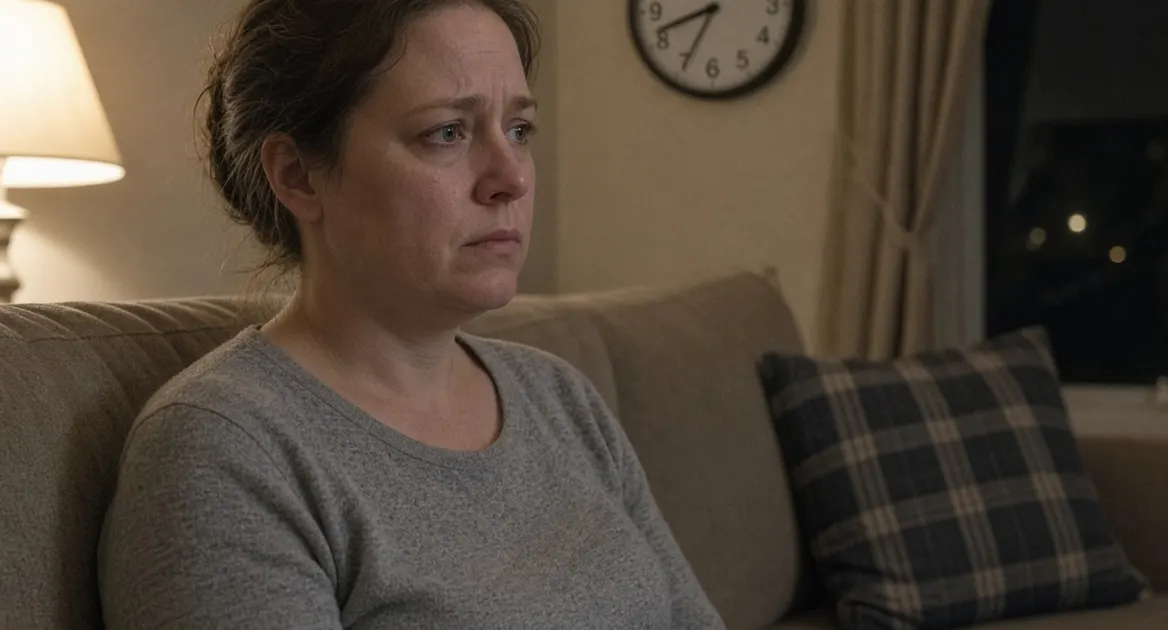
“We held a family vote, Naomi,” my mother-in-law said, folding her linen napkin into a neat triangle beside her plate and smiling in the particular way of a woman who has already won. “Everyone agreed that you shouldn’t attend our anniversary celebration.” She said it between a sip of wine and a bite of roast, in the same light, pleasant voice she might have used to mention that the weather had turned. Her forty-fifth wedding anniversary was approaching, she explained, and it was going to be a “family-only” event, and the family, by a show of hands I had never been invited to witness, had decided that I was not part of it. I looked down the long table at the faces I had sat across from for eight years, at my father-in-law Walter studying his glass, at my husband’s cousin examining the candle flame, and I felt the room settle around me like a lid. There was just one problem with the family’s arrangement, and it was a problem so large that I almost laughed. My husband’s girlfriend had been invited. She had also been promised the master bedroom of my lake house, the bedroom I had shared with Everett for eight years, with the quilt my grandmother stitched by hand folded across the foot of the bed. The house belonged to me, not to them. It had never belonged to them, though they had spent years behaving as though it did. Three days after that dinner, my mother-in-law would arrive at the lake with a garment bag and a smile, expecting a luxurious weekend of lake views and room service in all but name, and she would find me sitting on the front porch with a cup of coffee, perfectly calm. “What on earth are YOU doing here?” she would demand, and I would say the only thing there was to say. “Enjoying my own property.”
My name is Naomi Prescott. I am forty-three years old, and until very recently I believed my eight-year marriage to Everett was worth saving, which is a sentence I can now say without flinching, though it cost me a great deal to learn how. The dinner took place in Denver, at the long mahogany table in his mother’s dining room, under a chandelier she had once told me cost more than my first car. Beverly had invited us over, she said, to discuss her upcoming anniversary, and I arrived with a bottle of good wine and a notebook, because I assumed she wanted help organizing the celebration. I am the sort of person who arrives with a notebook. We had barely finished the soup when she set down her spoon, dabbed the corners of her mouth, and made her announcement, sweetly and without hurry, as though handing me a gift. The family had voted, she told me. Everyone believed the weekend would be “more enjoyable” without me. I stared at her across the centerpiece and asked her to repeat herself, because I genuinely thought I had misheard. “It’s nothing personal, Naomi,” she said, patting the air with one manicured hand. “We simply want a peaceful family weekend.” I turned to my husband and waited for him to say something, anything, the way a person waits for a train they are sure must be coming. Everett suddenly became fascinated with his dinner plate. He rearranged a green bean with his fork. He cut a piece of roast into smaller and smaller pieces, and in that long, shuffling silence I learned more about my marriage than I had in the previous eight years combined.
The celebration, of course, was meant to take place at my lake house near Grand Lake, in the high Colorado pines, where the air smells of resin and cold water and the mornings come up in layers of pink and gold. My late father left that property to me when he died, and I have spent the years since then keeping it alive. I paid for the new deck out of my own savings. I crawled under the cabin on my stomach to find the leak in the plumbing, and then hired someone to fix it properly. I replaced the damaged furniture one piece at a time, and I preserved, with a kind of fierce tenderness, the things that reminded me of the people I had lost: my grandmother’s quilt, my father’s fishing vest on its peg by the door, the framed photograph of him holding a trout the size of his forearm and grinning like a boy. Beverly, however, had always treated that house as her personal vacation retreat. She invited aunts and cousins and friends from church without asking me, announced holiday weekends as though they were royal decrees, and left her shoes in the hallway like a woman marking territory. I tolerated it, year after year, because I wanted to keep the peace with Everett’s family, and because I had been raised to believe that gracious women do not fight over furniture. But being shut out of a party held inside my own home was something else entirely. “Who exactly is attending?” I asked, my voice level. Beverly smiled, and the smile had a small, bright edge of triumph. “Camille Dubois will be joining us.”
I felt my stomach tighten, the way a rope tightens when a weight has finally been lowered onto it. Camille worked within Everett’s family business, a regional distribution company that his father had built and his mother had never stopped managing from the shadows. She was attractive and confident, a woman who always seemed to be standing exactly where the light fell best, and she appeared at my husband’s side at nearly every company dinner and holiday party. I had noticed how often their phones lit up at the same moment, how often they laughed at something neither of them would repeat. Whenever I raised the subject, Everett told me, with a gentle, patronizing sigh, that I was imagining things. So I asked, in front of the entire table, why a colleague would be invited to a family-only celebration. Nobody answered right away. A clock ticked in the hallway. Then Everett cleared his throat, set down his fork, and said, in a voice so careful it sounded rehearsed, “Naomi, Camille and I have been seeing each other.” For several seconds I could not speak. “Seeing each other?” I managed. He nodded. “For a few months.” Beverly leaned toward me as though she were explaining something perfectly reasonable to a slow child. “We thought it was best to avoid unnecessary tension during our anniversary,” she said. I looked between them, between the mother and the son, and I heard myself ask whether they had really decided to invite my husband’s girlfriend while excluding his wife. Beverly shrugged. “We’re trying to be practical,” she said. Then she delivered the final detail, the one that turned my shock into something sharper. “I’ve already arranged for Everett and Camille to stay together in the upstairs master suite.”
My bedroom. The one that held my grandmother’s handmade quilt and the framed photograph of my father. I pushed my chair back from the table, and the legs scraped the hardwood with a sound that startled everyone, including me. “Then you’ll need to find another venue,” I said. Beverly laughed, a bright, brittle laugh. “Oh, don’t be ridiculous. Everything is already arranged.” “Then you’ll have to rearrange it,” I said, and I picked up my purse. Everett followed me into the front hall, his footsteps hurrying, his voice dropped to the low, urgent register of a man who is more afraid of a scene than of an injustice. “Naomi, please don’t turn this into a scene,” he whispered. I turned around and looked at him, truly looked, at the man whose coffee I had made for eight years and whose shirts I had buttoned for a hundred early flights. “Your mother just announced that your girlfriend will be sleeping in my bedroom,” I said. “And you are worried about me causing a scene?” He opened his mouth, and nothing came out. I walked out into the cool Denver night, got into my car, and sat for a minute with my hands on the wheel, breathing, before I drove away. That evening, I called Margot, my longtime neighbor near the lake house, a retired schoolteacher who watches over my property the way a heron watches over a pond. “Margot, has anyone been at my place recently?” I asked. She hesitated. “Actually, yes, dear. There have been several deliveries, and a woman in a white SUV has been directing workers around the house.” My heart sank. Camille drove a white Acura. “Did she go inside?” “Several times,” Margot said. “She seemed to know the security code.”
Also readAt our fifth wedding anniversary dinner, my husband humiliated me in front of 30 guests, then shoved me to the floor when I defended myself. His mother laughed and called my father. “Come collect your worthless daughter!” she sneered. Dad only asked, “Did he hurt her?” When she proudly said yes, he calmly replied, “Then tell everyone to stay right there.” They laughed at his warning. But 90 minutes later, a convoy stopped outside their mansion—and my mother-in-law dropped her champagne glass…I closed my eyes and let that settle. They had not merely discussed using my house. They had already begun preparing it, without my knowledge or permission, as though I were a tenant who would simply be told when to move out. I thanked Margot, and the very next thing I did was call my husband. “I have withdrawn permission for the anniversary party,” I told him. “I will send written confirmation.” He exploded. His mother had already spent thousands on deposits, he said, and I could not possibly embarrass his family like this. “Then she should speak to the vendors,” I said. I looked down at my wedding ring, at the thin gold band I had never once taken off, and the words came to me with a calm I did not recognize. “Everett, you admitted you have been seeing another woman, and your mother plans to put her in my bed. You do not get to lecture me about embarrassment.” He hung up on me. The next morning I sent formal written notices to everyone concerned, withdrawing permission to use the property. I called the vendors one by one and explained, politely, that the house was no longer available. I consulted an attorney about protecting my ownership and my access rights, a sharp, quiet woman named Priya Raman, who listened without interrupting and told me to keep everything in writing. Then I drove up to Grand Lake. Saturday morning was beautiful. The lake shimmered beneath the sunlight, a cool breeze moved through the pines, and Margot came across the lawn with a basket of freshly baked blueberry muffins. We were sitting on the porch with our coffee when two SUVs turned into my driveway. Beverly stepped out of the first one carrying an expensive garment bag. Walter followed with an armful of suitcases. Then Everett climbed out of the second, and a woman stepped out beside him, and I stood up and walked to the top of the steps. “Naomi?” Beverly said, freezing in the gravel. “What are you doing here?” “I decided to spend the weekend at my lake house,” I said. Her expression hardened. “You know perfectly well we’re hosting our anniversary here!” “Not anymore.” “We have guests coming!” “Then you should let them know the venue has changed.”
Everett came toward me with his jaw tight. “NAOMI, I thought you’d calm down by now,” he said. I folded my arms. “You received the cancellation notice.” “Yes, but I didn’t think you’d actually go through with it.” That sentence told me everything. They had not taken my wishes seriously because they had never expected me to enforce them. Beverly waved a hand toward the house and complained that they had paid for catering, decorations, and everything else, that I could not simply cancel their plans, and I told her calmly that she had made those arrangements without my approval. She opened her mouth to argue, but before she could continue, Camille stepped forward from behind my husband’s shoulder. “Can someone please explain what’s happening?” she asked. She was taller than I had expected, with dark hair pulled back, a linen dress, and the wary face of someone who senses she has walked into the wrong film. “What exactly did Everett tell you?” I asked her. Camille hesitated. “He said you two had already separated,” she said, “and that everything was being handled amicably.” I slowly turned toward my husband. “Is that right, Everett?” He looked away, at the pines, at the lake, at anything but me. I faced Camille again and told her, in a gentle voice, that on Wednesday evening my husband and I had still been having dinner together, and that he had asked me to pick up his dry cleaning. Her expression changed at once. “He told me you hadn’t been living together for weeks.” I almost laughed. “We have been sharing the same house.” She stared at him. “Then why did you tell me your marriage was already over?” Everett rubbed his forehead and muttered that it was complicated. “Complicated?” Camille repeated. From the porch, Margot shook her head slowly. “That is certainly one way to describe it,” she said.
Beverly interrupted in a rush, insisting that this was none of Camille’s concern and that they had an anniversary party to prepare, and she seized the handle of her suitcase and started up the steps. I moved into her path and stood there, very still. “No, Beverly,” I said. “You’re not going inside.” Her face went red from the collar up. “You’re seriously going to keep us out?” “I have already withdrawn permission in writing.” “I’ll call the police!” “You are welcome to contact the appropriate authorities,” I said. “I have documented the ownership and the notices, and any disagreement about access can be handled properly.” She reached for her phone, but I was no longer watching her. I was watching Camille. She stood beside Everett, visibly shaken, one hand pressed flat against her collarbone. A few moments earlier she had looked like a woman arriving for a romantic weekend with a man she believed was free. Now she was looking at him as though she barely recognized him. “Everett,” she said quietly, “what else haven’t you told me?” He remained silent. The wind moved through the pines, and somewhere down at the water a loon called twice. Then Camille turned and looked directly at me. “Naomi,” she said, “there’s something you need to know about what Everett promised me.” I felt a chill despite the warm morning sunlight. “What did he promise?” I asked. She glanced toward the lake house, toward the porch and the windows and the master bedroom upstairs, and in that glance I suddenly understood that my husband’s deception might involve far more than an affair. He had been telling two women completely different versions of his life, and whatever he had promised Camille was connected to my property. Beverly had expected me to surrender my home for the weekend. Everett had expected me to quietly accept his betrayal. But neither of them had anticipated that Camille might start asking questions. And what she was about to reveal would change the entire confrontation.
“He told me the house would be ours by the end of the month,” Camille said, and her voice, though quiet, carried across the gravel as clearly as a bell. “He said you had agreed to sign it over in the divorce, Naomi, because you did not want a fight, and that the paperwork was already with his lawyer. He said this weekend was not only your mother-in-law’s anniversary.” She turned to Beverly, whose phone had slowly lowered to her side. “It was a toast to the new owners. That is why I was given the master suite. He told me it was going to be mine.” She opened her handbag with fingers that trembled, drew out her phone, and held the screen toward me. There were messages, dozens of them, from the previous six weeks. In one, Everett had written that the lake house would be the home they deserved, that I was “too sentimental to argue” and “always signs what I put in front of her.” In another, he had attached a photograph of a document with a long title, Quitclaim Deed, a draft prepared by a lawyer named Dale Whitfield, with my name typed neatly on the line beneath the signature block. I felt the ground tilt beneath my feet, and then, strangely, steady. Because I had seen that title before. Five weeks earlier, over breakfast, Everett had slid a folder across the table and told me it was “refinancing paperwork for the roof.” He had smiled, tapped the signature line with his pen, and said he was running late. I had not signed it. I never sign anything without reading it, and when I read the first page, my stomach had gone cold. That afternoon I took the folder to Priya Raman.
I did not tell them any of this at once. I let the silence stretch while I looked at my husband, who had gone the color of old paper, and I felt the full weight of eight years settle into a single quiet certainty. “Everett,” I said, “do you remember the folder you gave me at breakfast, the one for the roof?” He did not answer. “I took it to my attorney that same afternoon,” I said. “She told me what it was. And she told me something else, which I should have thanked her for sooner. My father’s house was already protected.” I turned to Beverly and Walter and explained it in plain, even sentences, the way I would explain it to a child. Eleven months earlier, on Priya’s advice, after a long, strange feeling I could not name, I had moved the lake house into a family trust, with myself as sole trustee and sole beneficiary. A quitclaim deed signed by me would have been meaningless, because I no longer owned the house in my own name. Nobody could sell it, mortgage it, or give it away but the trustee. “Priya filed the notices last week,” I said. “That is why Margot has been keeping a log of every vehicle that has come onto my property. That is why the vendors were refunded by the trust, not by me.” Beverly’s mouth worked silently. Everett took a half step backward, and his heel found the edge of the gravel and slipped. “You knew,” he said, hoarsely. “I knew enough,” I said. “And I was hoping, for eight years, that I was wrong.”
It was Walter who broke the silence, and I will remember that for as long as I live. My father-in-law, a heavy, soft-spoken man who had spent forty-five years being talked over in his own home, set down the suitcases he was carrying with a long, deliberate sigh. “Beverly,” he said, and his voice shook, “I never voted.” The word hung in the mountain air. “There was no vote. You said everyone agreed, and I sat there and let you say it, and I have been ashamed of it every day since.” Beverly turned on him with a look of such astonishment that it was almost comic. “Walter, we discussed this.” “You discussed it,” he said. “I listened. That is what I do.” He turned to me then, and his eyes were wet. “Naomi, I am sorry. You were the only person in that family who ever asked me how I was feeling, and I did not have the courage to say so. I should have stopped this at the dinner table.” He straightened, a stooped, gray man in a windbreaker, and I saw, for a moment, who he might have been if someone had ever let him speak. Then Camille took a step toward me, her own face crumpled. “I am so sorry,” she said. “I did not know. I swear on my mother, I did not know you were still together.” I believed her, and I told her so, because she deserved the truth even though she had not been offered it. “You are not the one who lied to me,” I said. “Do not carry what is his.” She nodded, tears sliding down her cheeks, and Margot, who had come down the porch steps without a sound, put a hand lightly on her arm and offered to drive her to the village, where she could get a coffee and a ride back to Denver in peace.
Beverly was the last to crumble, and it happened so slowly that I almost missed it. She stood by her garment bag, rigid and flushed, and I watched her search her face for the right indignation, the right sentence to rescue the morning, and fail to find one. When she finally spoke, it was in a small, cracked voice that I had never heard her use. “Did the family really vote?” she asked, to no one in particular. “No,” Walter said gently. “It was you, Bev.” She sat down on the bottom porch step, in her good linen slacks, and for a long time said nothing. The wind moved the pines. Margot’s car pulled away down the long gravel drive with Camille in the passenger seat. Then Beverly told me something I had not expected. She said that she had spent forty-five years living in other people’s houses, first her mother-in-law’s, then a succession of rentals that Walter’s business could never quite afford to leave, and that she had never once owned a place she could call her own. When she saw me inherit the lake house, with its deck and its quilt and its view, she had felt a bitter, shameful envy she had never named. “I wanted it to be ours,” she said. “I wanted one room, in one house, where I was the one who decided who came in.” She looked up at me with red-rimmed eyes. “And instead I did to you exactly what was done to me.” I sat down on the step beside her, the first time in eight years I had sat that close without arranging my face, and I told her that wanting a home was not a crime. Taking one was. She nodded, wiped her eyes with her wrist, and let Walter lift her gently to her feet.
Everett stayed behind when the others had gone, standing in the gravel with his hands hanging at his sides like a man waiting for a sentence. I went to my car, took out a plain manila envelope, and handed it to him. Inside was a petition for dissolution of marriage, which Priya had filed the day before, along with a copy of the draft quitclaim deed, a log of the messages Camille had forwarded to my attorney that morning, and a note in my own handwriting listing a fair division of our belongings. I told him that I would not fight him for anything that was truly his, and that I would not give him a single thing that was not. He tried to speak, and his voice cracked, and he asked whether we could not just talk. “We talked for eight years, Everett,” I said gently. “You just never said anything.” He cried then, with his hand over his eyes, and I did not comfort him, because there are tears a person must spend alone. He left before noon. Dale Whitfield, his attorney, resigned from the case within the week, after Priya sent him a letter outlining what he had drafted, and the matter was settled quietly by the end of winter, on terms that were more generous to Everett than he deserved. Camille wrote to me in December, a short and honest note, saying she had resigned from the family business and taken a position in another city. She thanked me for the kindness I had shown her on the gravel that morning. I wrote back that I hoped she found a house of her own someday, with a door she chose to lock.
I spent that first night alone in the lake house with the windows open, listening to the water. I carried my overnight bag up to the master bedroom, spread my grandmother’s quilt across the bed, and stood for a long time in front of the framed photograph of my father with his enormous trout. “I kept it,” I told him, and I felt silly, and I did not care. In the months that followed I repainted the guest rooms, replaced the old front door with a heavy one of knotty pine, and had a plain brass lock installed on the master bedroom, which I never used, and loved knowing was there. In June I held a small gathering on the deck, with Margot and her husband, Priya and her wife, and two neighbors from the village who had once looked after my father. Walter came alone, in a pressed shirt, carrying a blueberry pie he had baked himself, and he stood awkwardly in the doorway until I took his arm and brought him inside. Beverly sent a card, a short note in careful handwriting, that said only, “I am learning. Thank you for letting me.” I did not answer for a month, and then I invited her to lunch, on neutral ground, at a diner in town. We have been mending, slowly, over bad coffee and plain talk. I do not know what Everett will make of himself, and I wish him no harm. But when I think about that weekend now, I do not remember the anger. I remember the porch, the coffee, the pines, and the feeling of standing at the top of my own steps and saying no without raising my voice. Freedom, I have learned, is not a grand escape. It is a quiet room where no one votes on whether you belong, and where the only door that matters is the one you decide to open.
This article is general information, not personal medical or financial advice. Talk to a qualified professional about your own situation.