My Husband Forged My Signature And Sold My Ranch To His Girlfriend For Ten Dollars, Expecting Me To Leave Quietly, But My Silence Was Never Surrender And He Was About To Find Out Exactly Why
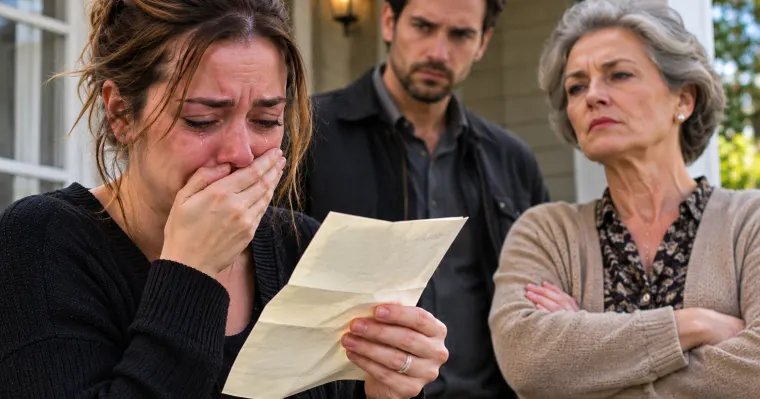
The feed store sits on the edge of Sheridan, Wyoming, where the paved road turns to gravel and the Bighorn Mountains rise blue and white in the distance like a wall at the end of the world. Teague’s Feed and Ranch Supply has been there since 1962, a long, low, corrugated metal building with a hand-painted sign and a loading dock out back, and I have been buying feed there every week for twenty-one years. On that particular Friday morning in late October, the air was sharp with the first real cold of the season, and I was standing at my tailgate in the gravel lot, loading fifty-pound sacks of sweet feed into the bed of my old green Ford one at a time, when a white Mercedes SUV pulled up beside me and stopped much too close. A woman got out. I knew who she was. Everybody in Sheridan knew who she was. Her name was Crystal Moreland, forty-one years old, the owner of a boutique fitness studio downtown called Elevate, with platinum hair and a white puffer coat and the kind of perfect white teeth you can see from across a parking lot. She walked straight up to me with a sheaf of papers in her hand, waving them in the cold wind like a trophy, and she said, loud enough for every rancher loading feed in that lot to hear, that she just wanted to stop and say thank you. For the ranch. She laughed and said that ten dollars felt pretty generous, honestly. Then she held the top page out in front of my face. It was a warranty deed. A transfer of title. To the Bar M Ranch, three thousand two hundred acres of land on Little Goose Creek, from Marlee Ann Brennan to Crystal Lynn Moreland, for the consideration of ten dollars. And at the bottom, on the line for the grantor’s signature, was my name. Except that it wasn’t. It was misspelled, as though someone had written it from memory and gotten the double e wrong, and the handwriting was so stiff and careful and so unlike my own that it was almost an insult.
Through the dark tinted windows of the Mercedes, I could just make out the shape of a man in the passenger seat, his face turned away toward the far side of the lot. My husband. Douglas Brennan. I didn’t say a word to Crystal. I turned back to the stack of feed sacks on the loading dock and picked up another fifty-pound bag and swung it up into my truck bed, the way I had ten thousand times before. Then another. And another. Steady and deliberate. Crystal kept talking. She said she was thinking about turning the horse barn into a yoga and wellness retreat. She said the stables would make perfect private meditation suites. She said the view from the ridge would be stunning for sunrise classes. She said that Douglas had told her I would be out by Tuesday. Tuesday. Four days to walk away from the ranch I had built with my own two hands from nothing. I lifted another sack. The weight of it in my arms was familiar and steadying, like the weight of a saddle. I looked at the signature on that deed again as she waved it around. It looked like someone had copied my name with their left hand, half asleep. For twenty-one years, I had signed livestock registrations, breeding certificates, vet bills, feed invoices, bank loans, hay contracts. My signature was a big, looping M with a long tail on the y, the same way my father signed his name. Douglas, of all people, should have known exactly how I sign my name. He had watched me do it at the kitchen table every night for nineteen years. Gus Teague, who owned the feed store, was standing frozen in the doorway of the loading dock with a clipboard in his hand, watching all of this with his mouth slightly open. Gus was seventy-three. He had sold me my very first bag of feed when I was twenty-six years old, two weeks after my father’s funeral. My father had been a large-animal veterinarian in Sheridan for thirty years, and when he died of a stroke, he left me a two-hundred-thousand-dollar life insurance policy, and I took every cent of it and bought eight hundred acres of overgrazed, eroded, weed-choked ranch land on Little Goose Creek that nobody else in the county wanted. Gus had told me at the time that I was crazy. Then he extended me credit for a year.
Gus came down the loading dock steps slowly and asked me if everything was okay, his eyes moving from Crystal’s bright smile to my face. I told him everything was perfectly fine. I swung another sack into the truck bed. I said Crystal was just explaining how she had bought my ranch. Gus repeated the word bought, as though he didn’t understand it. He said, but Marlee, you just ordered your whole winter feed supply for the ranch, last week, twelve tons. And before he could finish, Crystal cut him off. She said ten dollars, and jabbed the papers toward him. She said it was legal, signed, and recorded, and that Douglas had handled everything. And that was when I saw it. Inside the Mercedes, Douglas’s hand moved to the door handle. I watched his fingers rest on it. He hesitated, as though he were about to get out. And then his hand stayed exactly where it was. He didn’t open the door. Nineteen years we had been married. Nineteen years of mornings and calving seasons and blizzards and droughts and funerals. And he couldn’t even turn his head and look at me while he tried to steal everything I had worked my whole life to build. Of everything that happened that day, that was the part that stung the most. Not the affair. Not even the deed. That he wouldn’t look at me. Crystal’s phone rang in her coat pocket. She answered it with a high, girlish giggle that was far too young for a woman her age. She said, yes, baby, I’m telling her right now. Then she turned the phone around and held it out toward me. She said Douglas wanted to talk to me. He was sitting fifteen feet away in her car, calling me on her phone rather than rolling down a window. I set down the last sack in the truck bed. I walked slowly around to the back of the truck and lifted the tailgate and closed it, carefully, until the latch clicked. Then I looked at the phone in Crystal’s hand and said, tell him he knows exactly where to find me.
I climbed into the cab of my truck without another word and started the engine. In my rearview mirror, as I pulled out of the lot, I saw Gus take the deed papers out of Crystal’s hand and hold them up and read them in the cold sunlight. I watched his face change from confusion to something darker and harder. Gus had seen a lot of bad deals in his seventy-three years. He knew fraud when he saw it. The drive home took fourteen minutes. I didn’t need to think about the turns; my hands knew them. Down the gravel county road along Little Goose Creek, past the Pickett place, where their new paint foal was racing circles in the frosty pasture beside its mother, past the old cottonwood that lightning had split in half the summer I turned thirty, and up over the long rise where the whole valley opens up below you, three thousand two hundred acres of grass and creek and timber and sky. When I bought it, twenty-one years earlier, it was a dust bowl. The creek banks had collapsed from decades of overgrazing. Cheatgrass and leafy spurge choked the pastures. The barn was falling down. I spent two decades bringing it back to life, a little at a time, with my own hands and every dollar I earned. I fenced the creek. I replanted the native grasses. I rotated the cattle. I bought the neighboring parcels, one by one, as they came up for sale. I started breeding quarter horses, and then I got good at it, and then I got very good at it, and by the time Douglas met me, Bar M quarter horses were selling at auctions in Fort Worth and Oklahoma City. Rosa Delgado’s pickup was parked beside the horse barn when I came over the rise. Rosa had been the ranch manager at the Bar M for eleven years. She was forty-eight, small and wiry, with a gray braid down her back and the best eye for a horse I had ever seen in my life. Her instincts were sharp. Her loyalty was sharper.
She climbed out of her truck as I pulled up, holding a clipboard with the morning’s feed schedule, and she took one look at my face and stopped. She said my name. Just my name. Marlee. And everything else was in the way she said it. I told her that Crystal Moreland had just told me, in the parking lot of Teague’s, that she had bought the Bar M for ten dollars. Rosa’s face didn’t change. But I watched her knuckles go white on the clipboard. She said that explained why Douglas had been loading a U-Haul truck behind the house at six-thirty that morning. She said she had assumed I knew about it. She had been down in the round pen working the yearlings and hadn’t thought to ask. He had been packing up his escape while I was out in the training arena, and I had never even known my marriage was being loaded into a rental truck behind my back. I told her to show me. We walked up to the house together. My house. The log house I had built, mostly with my own hands and with the help of two hired carpenters, the summer after I bought the land, with the last of my father’s insurance money. Douglas’s half of the closet was empty. His guns were gone from the cabinet. And the office, the little room off the kitchen where I kept the ranch’s paperwork, had been stripped bare. Every desk drawer was empty. The filing cabinet stood open and gutted, nothing left inside but a few paper clips and a dead pen. Twenty-one years of ranch records, gone. Rosa swore softly in Spanish. But Douglas had underestimated me if he thought I kept the things that really mattered in the obvious places. I walked into the kitchen. I pulled the old refrigerator away from the wall a few inches. And from the narrow space behind it, I lifted out a battered red Folgers coffee can, wrapped tightly in a plastic grocery bag and taped shut.
Also readJenny McCarthy and Donnie Wahlberg’s Multimillion-Dollar Home Sale Triggers an Emotional Family CrisisI set it on the kitchen table and peeled back the tape. Inside was everything that mattered. The original warranty deed to the first eight hundred acres, from 2004, with only one name on it: Marlee Ann Kowalczyk, my maiden name. The deeds to every parcel I’d added since. Receipts for every improvement on the property, every fence and well and barn. The breeding records for every Bar M horse. And something else, at the very bottom, folded small. A receipt from the Bluffview Inn, a fancy boutique hotel in Billings, Montana, two hours north. Two nights. A bottle of Veuve Clicquot champagne. Room service for two. And clipped to it, a small piece of hotel stationery with a handwritten note in looping purple ink. It said: can’t wait for our new beginning. C. Rosa looked at it, and then at me. She asked me, quietly, if I had known. I told her I had suspected. I told her I had found that receipt six weeks earlier, in the pocket of Douglas’s good sheepskin coat, the week he told me he was going to a cattle auction in Miles City. I folded the receipt and put it back in the coffee can. Suspicion isn’t proof. But preparation matters. And for six weeks, I had been very quietly preparing. Then my phone buzzed on the kitchen table. I looked down at the screen. It was Charlene. Douglas’s older sister. She lived in Casper and taught high school history, and she was the only person in Douglas’s family I had ever been close to. It was the third time she had tried to call me that week. I had been too busy to call her back. This time, I picked up. She was breathless, as though she had been running. She said my name. She said, Marlee, I’ve been trying to reach you all week to warn you. She said Douglas had been calling her and asking her strange questions. She said he’d been asking about property transfers and quitclaim deeds and loopholes in the recording process. She said he had asked her whether a county clerk would actually check a signature against anything.
I told Charlene I knew. She went quiet. Then she said there was more. She said that Douglas had called her two nights earlier, drunk, and told her that Crystal’s cousin was a notary public in Johnson County who had agreed, for five hundred dollars, to notarize a deed without me being present. She said Douglas told her he and Crystal were planning to take out a six-hundred-thousand-dollar loan against the ranch the moment the deed was recorded, to pay off his gambling debts from the casino in Sheridan and to put a down payment on a house in Scottsdale. Charlene said she was so sorry. She said she had been sick about it for two days. I thanked her. I told her she had done the right thing. And then I told her what Douglas didn’t know, what nobody knew except me and my attorney and a single clerk at the Sheridan County Recorder’s office. I told her that six weeks earlier, the morning after I found that hotel receipt in Douglas’s coat pocket, I had driven into town and sat down in the office of an attorney named Ruth Ostrowski, who had been my father’s lawyer for twenty-five years. I had shown her the receipt. I had told her what I suspected. And Ruth had looked at me over her reading glasses and said, Marlee, the first thing a man like that does is go after the land. So we protected the land. The very next morning, I transferred every acre of the Bar M Ranch, all three thousand two hundred of them, out of my personal name and into a revocable living trust, the Marlee A. Kowalczyk Land Trust, with myself as the sole trustee and Rosa Delgado as the successor trustee. The deed transferring the land into the trust was recorded with the county that same afternoon. And then, because Ruth had seen this kind of thing before, we also filed a sworn affidavit with the Sheridan County Clerk, along with a copy of my real signature, stating that I would never sign any deed to any property without my attorney physically present, and requesting that the clerk’s office flag any document bearing my name for verification. I hadn’t owned the ranch in my own name for six weeks. The deed Crystal had waved in my face in that parking lot, signed Marlee Ann Brennan, transferred land from a person who no longer owned it. It wasn’t worth the paper it was printed on.
Ruth Ostrowski came out to the ranch that afternoon in her old Subaru with a briefcase and a thermos of coffee. She read the copy of the forged deed that Gus Teague had photographed on his phone and texted to me, and she shook her head slowly. She said that the county clerk had already called her that morning. The deed had been presented for recording on Thursday afternoon, and because of my affidavit, the clerk had flagged it, compared the signature against the copy we had filed, and refused to record it. Crystal and Douglas had walked out of the clerk’s office believing they’d recorded it. They had simply been handed back a stamped receipt for the filing fee. The clerk had immediately forwarded a copy of the forged deed, and the notary’s seal, to the Sheridan County Attorney’s office. Ruth said that forgery and filing a false instrument were both felonies in Wyoming. She asked me what I wanted to do. I told her I wanted to do exactly what I had been doing all along. Nothing loud. Nothing ugly. I just wanted the truth to arrive on its own. So on Tuesday morning, at nine o’clock, I was out in the round pen working a two-year-old sorrel filly named Josie when a convoy came up the gravel road over the rise: Crystal’s white Mercedes, a big yellow moving truck, a flatbed trailer loaded with pallets of bamboo flooring and a stack of yoga mats, and a Sheridan County Sheriff’s Office SUV. Crystal had called the sheriff to have me evicted. I kept working the filly. Ruth Ostrowski’s Subaru was already parked by the barn. She and Rosa walked out to meet them. A tall, sunburned deputy named Wes Tolliver climbed out of the SUV with a copy of the deed and a puzzled expression and asked for Mrs. Brennan. Ruth handed him a manila folder. Inside were a certified copy of the trust deed, recorded six weeks earlier, a certified copy of my affidavit with my real signature, the clerk’s rejection notice, and a letter from the Sheridan County Attorney’s office confirming that a criminal investigation into the forged deed had been opened on Friday morning. Deputy Tolliver read every page, slowly, while Crystal stood beside the Mercedes in her white puffer coat with her arms folded, tapping her foot. Then he looked up at her and asked, politely, where Mr. Brennan was. Crystal said he was in the car. The deputy walked over and knocked on the tinted passenger window. After a long moment, Douglas rolled it down.
I didn’t hear what the deputy said to him. I was a hundred feet away in the round pen, with my hand on the filly’s neck. But I watched my husband’s face as the deputy talked, and I watched it go from smug to confused to gray. I watched him get out of the car, slowly. And for the first time since that Friday at the feed store, Douglas Brennan looked at me. He looked across that frosty yard, over the fence of the round pen, straight at me, and I looked back at him. I didn’t say anything. I didn’t need to. He knew. He had always known how I sign my name. He just never imagined I would be the one to protect it. Deputy Tolliver asked him and Crystal to follow him into town to answer some questions at the sheriff’s office. Crystal began shouting that she had paid ten dollars, that she had a legal deed, that Douglas had told her his wife signed it. The deputy asked her who notarized it. Crystal went very quiet. The moving truck turned around in my driveway and went back down the road empty. The pallets of bamboo flooring went with it. And as the convoy disappeared over the rise, Rosa came and leaned on the round pen fence beside me and said, in her dry way, that it was a shame about the yoga studio, she’d been looking forward to sunrise classes. I laughed for the first time in four days. I laughed so hard the filly spooked and trotted to the other side of the pen. In the weeks that followed, the investigation moved quickly. Crystal’s cousin, the notary in Buffalo, confessed within forty-eight hours and lost her commission. Crystal herself, it turned out, had genuinely believed I’d signed the deed; Douglas had told her I agreed to sell her the ranch for ten dollars as part of a quiet divorce settlement, in exchange for him not contesting anything else. When the county attorney showed her the real signature, she cried in the interview room, Deputy Tolliver told me later, and said she couldn’t believe she had stood in a parking lot and thanked a woman for her own stolen land. She broke things off with Douglas that same week. She sent me a short note through her lawyer, apologizing. I didn’t answer it, but I kept it.
Douglas pleaded guilty in February to one count of forgery and one count of attempting to record a fraudulent instrument. Because he had no prior record and because the deed was never recorded and no money ever changed hands, he was sentenced to three years of supervised probation, two hundred hours of community service, and full payment of my legal fees. The divorce was simple, because of the prenuptial agreement Ruth had insisted on nineteen years earlier, back when I thought she was being paranoid and told her so. The ranch had always been my separate property, bought before our marriage with my father’s insurance money, and every acre I had added since had been bought from the ranch’s own income in my name. Douglas walked away with his truck, his guns, half our joint savings account, and his gambling debts. The last I heard, he was living in a rented apartment in Gillette and working at a car dealership. Charlene still calls me every Sunday. She drove up from Casper for Thanksgiving and helped me cook a turkey for Rosa and her family and Gus and his wife, and we ate at the long pine table in the log house my father’s money built, and nobody mentioned Douglas once. In the spring, I did something I’d been thinking about for years. I placed a permanent conservation easement on twenty-four hundred acres of the Bar M, with a land trust in Laramie, so that no matter who owns the ranch after me, it can never be subdivided, never be paved, never be turned into anything but grass and creek and horses and sky. Rosa cried when I told her. So did I. On the first morning in May, just after dawn, I saddled up the sorrel filly, Josie, three years old now and the best horse I’ve ever bred, and I rode her up to the top of the rise above Little Goose Creek, where the whole valley opens up below. The cottonwoods along the creek were just leafing out, a pale, new green. The mares were grazing in the bottom pasture with their spring foals. The Bighorns were still white at the top. I sat there in the saddle for a long time with the reins loose in my hands, looking at three thousand two hundred acres of land that I had brought back to life from nothing, one fence post and one blade of grass at a time. Douglas thought my silence meant surrender, but silence was only the sound of a woman who had already done the work, and I finally understood that the land was never what made me strong; it was knowing exactly what I had built, and never once asking anyone’s permission to keep it.
This article is general information, not personal medical or financial advice. Talk to a qualified professional about your own situation.