I Spent Years Learning Where My Seat Was In My Own Family And Then Built One Beautiful Day Where Every Single Chair Had A Name Written Carefully Upon It For Someone Who Truly Belonged
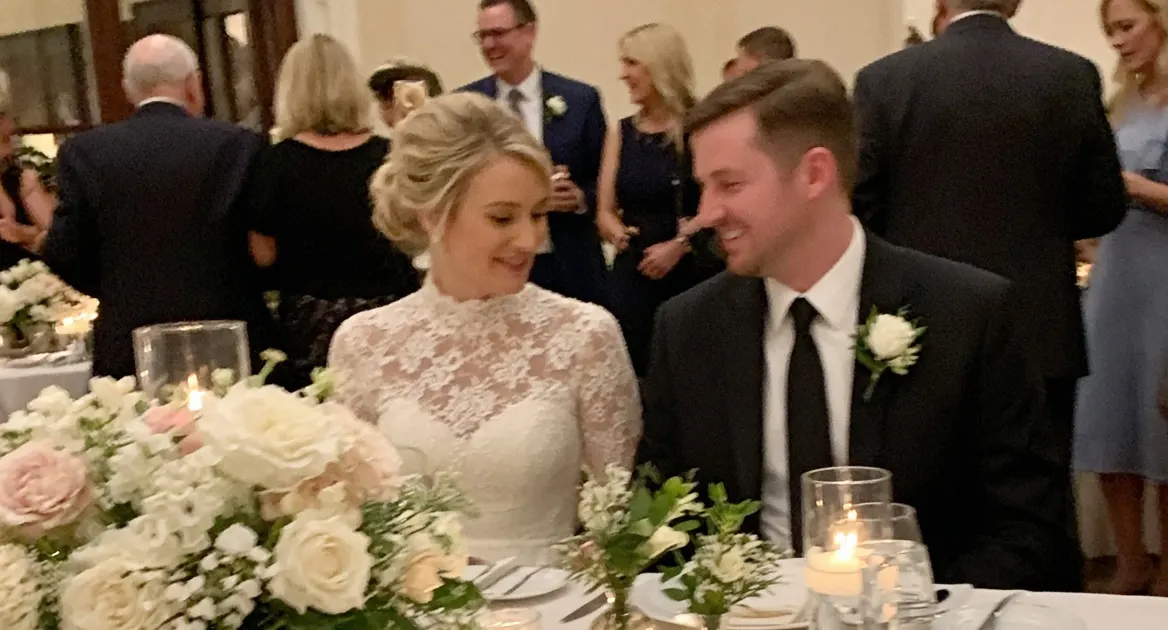
My father’s finger was hovering inches from my nose when the string quartet lost the thread of the waltz and stopped, one instrument at a time, until the only sound left on that stone patio was the wind moving through the vines. I remember how clearly I could hear a wine glass being set down somewhere behind me. I remember the late September light turning everything the color of honey, the bay shimmering in the distance, and seventy-five people holding their breath in clothes they had chosen to celebrate me. My name is Nathan Langford, I am thirty-six years old, and I had been married for less than two hours. My new wife Mara stood close enough that her palm rested against the small of my back, warm and steady, the way it had rested there through every hard conversation of the last eleven months. In front of me stood my parents in matching forest green, my father’s face the color of a bruise, my mother clutching her purse against her stomach like a life preserver. Behind them hovered my brother Brett and his wife Courtney, dressed in the same shade, wearing the faint, braced expressions of people who had known this was coming. “What kind of son does that?” my father had shouted, and the words were still ringing off the stone. I want to tell you how I came to be standing in that vineyard, because the shouting did not begin that afternoon. It began years earlier, in rooms where nobody raised their voice at all, and where a boy learned exactly how much space he was allowed to take up. I grew up outside Columbus, Ohio, the youngest of three brothers in a brick house with a basketball hoop over the garage. Brett, the eldest, was the golden child, the one with the easy grin who could do no wrong. Colin, the middle brother, was the dependable one, the son my parents trusted with keys and responsibilities. And I was the kid everyone called independent, a word that was always handed to me with a smile, and that I slowly understood was a polite way of saying that nobody would miss me if I were not there.
When Brett got married in 2013, I was twenty-three, and I did not receive a job. I was not a groomsman, and I was not even an usher, and I sat in the fifth row of a lovely little church while my mother Denise directed the entire event like a general. I remember offering to help set up the chairs the morning before, and she smiled at me with real tenderness and said, “Honey, this is for the wedding party.” There was no cruelty in it, and that was what made it so hard to name. She simply put me in a category, and the category had no door. Four years later, Colin was engaged, and this time I thought I had learned. I called months in advance and said I would do anything, carry anything, stand anywhere. Eventually Mom told me, in the careful voice she used for bad news, that the wedding party was already full. Brett had a place again, naturally, and I sat in the fourth row this time, which I suppose counted as progress. At the reception, my father found me near the bar. His tie was loose, his cheeks were flushed from the open bar, and he placed a heavy hand on my shoulder in a gesture that was meant to be affectionate. “Not everyone’s cut out for the spotlight,” he said. “Some people are audience, and that’s okay.” He squeezed once and walked away, satisfied, as if he had given me a gift. I stood there with a glass of ginger ale and understood that I had just been assigned a seat for life. I never forgot those words. They traveled with me when I moved to Pittsburgh the following spring, when I built a career in commercial real estate one cold call at a time, and when I finally stopped waiting by the phone for invitations that never came. For nearly three years, nobody in my family called to ask how I was doing. I do not say that to be pitiful. I say it because it is the context in which a woman named Mara chased a runaway terrier into my parking garage, and changed what I believed was possible.
Her dog was named Pepper, and she was a small, indignant creature with one ear that never stood up straight, and she bolted through the garage gate on a drizzly Tuesday evening with a leash trailing behind her. I was the only person in the elevator lobby, and I did what anyone would do, which was drop my briefcase and run. We chased Pepper up two ramps and around a concrete pillar, and when I finally caught her, Mara arrived out of breath and laughing, with her hair coming out of its clip and mascara smudged from the rain. She looked at me, a total stranger who had just sprinted through a garage in dress shoes, and said, “Thank you for choosing to help.” It was a small, strange way to put it, and I thought about it for days. Mara was the first person in my adult life who made being chosen feel ordinary, like something that happened on a Tuesday and did not need to be earned. She remembered the name of my favorite coffee shop, and asked about my week and then waited for the answer. When I told her about the fifth row and the fourth row, she did not say that my family loved me in their own way. She said, “That sounds lonely,” and the word undid me because nobody had ever said it before. After a year, I proposed on the roof of my building, with Pepper wearing a tiny bow tie. When I called Mom to share the news, she managed about thirty seconds of congratulations before the conversation turned, as smoothly as a river finding its bed, to Brett’s growing family and his son’s soccer schedule. I hung up and told Mara it was fine, and she looked at me for a long moment and said it was not, and that I did not have to pretend with her.
We planned a small wedding, which turned out to be an act of defiance only because we kept insisting it was small. We chose a vineyard outside Traverse City, Michigan, where a stone patio looked out over the bay and a walnut arch built by Mara’s father would stand at the edge of the rows. We wanted seventy-five people, and every one of them was chosen because they had shown up for us, not because a family tree demanded it. I still put my parents on the list, and both of my brothers, and their wives, because some part of me was foolish enough to hope. Six invitations. Six assigned seats. It should have been enough, and for any other family, it would have been generous. But my mother Denise could not receive an invitation without turning it into a campaign. First she offered Brett as a groomsman, explaining to me kindly that I did not seem to have many close friends. Then she suggested a reading for Dad, a mother-son dance, and matching outfits for the entire Langford family, so that the photographs would look like a set. I told her that Mara and I would make our own decisions, and I said it politely, and she said, “Of course, honey,” in the tone that means the matter is only beginning. The next morning, she accidentally included me in a family group text. I was reading a message about an unrelated birthday dinner when a new one landed from my mother, intended for Brett and Colin. “This might be our best chance to finally get a nice family event out of him,” she wrote. I read the sentence twice, and then a third time, until the letters seemed to lose their meaning. It did not say celebrate Nathan, or see Nathan, or even come to Nathan’s wedding. It said get an event out of Nathan, as if I were an appliance that had finally agreed to turn on. I showed Mara, and she read it in silence, and she set the phone face down on the counter. “What do you want?” she asked. “The wedding we planned,” I said. So we kept planning.
Then Mom called to announce that she had promised seats to another twenty, maybe twenty-two, relatives. Our entire guest list had seventy-five spots, and we had filled every one of them on purpose. “Mom, we’ve finalized the list,” I said. “Well, you can adjust it, can’t you?” She had already told Aunt Linda that I would be thrilled. I said that I needed to talk to Mara, and then I hung up and did something I would not have believed I was capable of a year earlier. I called our venue coordinator, a calm, wonderful woman named Joanna, and I asked her to lock the guest list so that no changes could be made without a password that only Mara and I knew. Four days later, Joanna phoned me in the middle of a meeting. “Your mother just tried to add twenty-two people,” she said. “I told her no, politely.” Soon after, my father called, furious in the controlled way he got when he felt wronged, because Grandma June was not on the list. “She’s family, Nathan.” I looked at the ceiling of my office and said the sentence I had been carrying for thirty-six years. “So am I, Dad. So am I.” After that the calls stopped, and I recognized the silence at once, because it was how my family waited for me to give in, the way you wait out a child who has refused to eat. While they waited, Mara sat at our kitchen table with a calligraphy pen and a stack of thick cream cardstock, and she wrote every guest’s name in gold, one letter at a time. My parents were assigned to table six. Brett and Courtney were at table eight, and Colin and his wife were at table ten. There was no special Langford family table, because we had decided that we wanted our families spread among the people who loved us rather than arranged into a bloc. Then a forwarded email arrived from the florist. Courtney had been contacting vendors as though she were Mara’s coordinator, asking about extra flowers for family tables we had never ordered. I saved the email. My mother also contacted our photographer, a patient woman named Sofia, requesting formal family portraits that were not on the schedule. I saved that too. The vendors all had instructions. Our day-of coordinator, Camille, had the guest list, and my best man, Miles, a gentle giant who had once talked me out of a very bad haircut, knew to step in if anyone tried to interrupt.
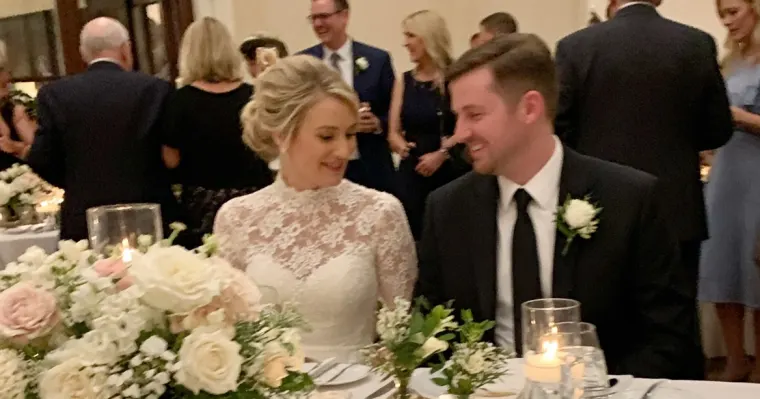
Ten days before the ceremony, Brett forwarded me another message from Mom, and I do not know whether he did it out of guilt or out of a rare flicker of honesty. She had purchased forest green outfits for the entire family, down to the tie clips. “We’re going to show up as a united front,” she had written. “We’ll look like a family whether he likes it or not.” On September 20, they arrived at the vineyard in coordinated green suits and dresses, and my mother even wore a corsage, pinned high on her shoulder like a medal. Camille told me afterward that Denise had spent five full minutes staring at the seating chart before demanding to know why the family had not been seated together. Then the ceremony began, and for twenty-five minutes the day belonged entirely to us. Mara came down the grass in a pearl white dress with wildflowers in her hands and her father at her side, and I cried the moment I saw her, openly and without shame. We exchanged vows beneath the walnut arch while the bay glittered behind us, and the guests cheered when we kissed, and even my family sat through the whole thing without causing a scene. I allowed myself to believe it would hold. But during cocktail hour, my mother cornered Sofia about the unscheduled portraits, and when Sofia politely refused, Mom marched across the lawn in her green heels with my father behind her and Brett and Courtney trailing after. “Why isn’t our family sitting together?” she demanded in a voice that carried. “Why wasn’t I invited to the rehearsal dinner? Why can’t I have family pictures at my own son’s wedding?” “Mom, this isn’t the time.” “This is exactly the time! I drove six hours. I dressed this entire family to match!” Then Dad pushed past her, his face turning red. “You dragged us here to embarrass us!” he shouted. “You put us with strangers! What kind of son does that?” The quartet fell silent. Mara’s parents froze near the appetizer table, and Miles began to move across the grass toward us. I looked at the forest green outfits, my mother’s white-knuckled purse, and my father’s accusing finger. Then I thought about the fifth row, and the fourth row, and the words he had spoken to me by a bar eleven years earlier. Mara gave me the smallest nod, and I felt it all the way down to my shoes. I stepped forward, waited for Dad to stop talking, and opened my mouth.
THE STORY CONTINUES ON THE NEXT PAGE… 👇👇👇
This article is general information, not personal medical or financial advice. Talk to a qualified professional about your own situation.