I Spent Years Learning Where My Seat Was In My Own Family And Then Built One Beautiful Day Where Every Single Chair Had A Name Written Carefully Upon It For Someone Who Truly Belonged
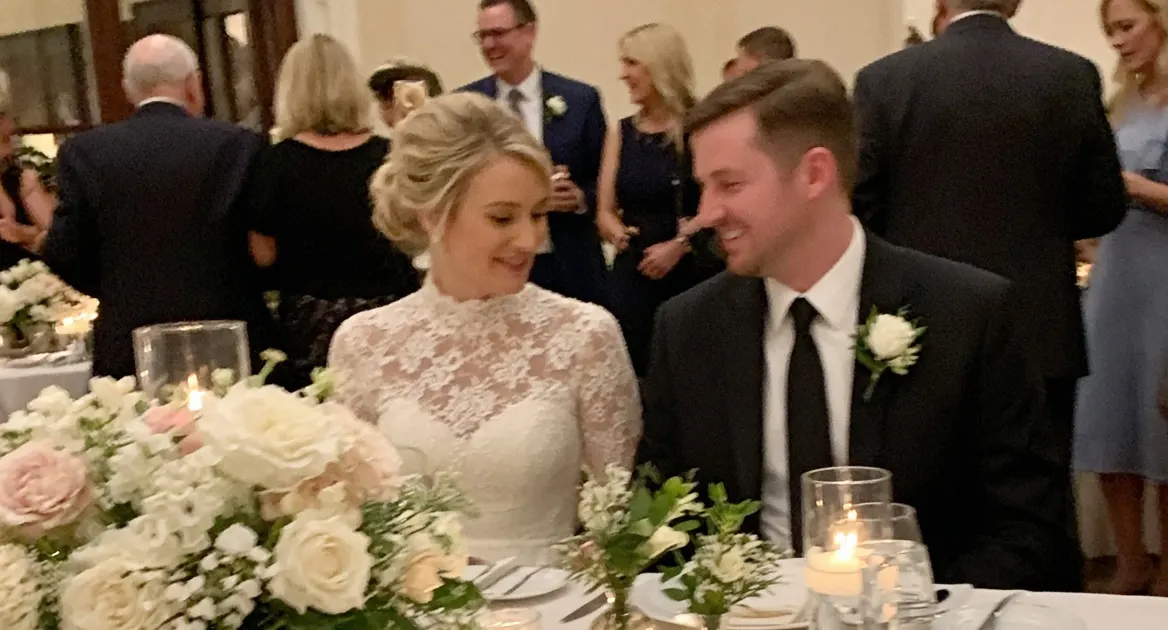
“Dad, I would like to answer your question,” I said, and my voice came out lower and steadier than I expected. “You asked what kind of son does that. I think that deserves an honest answer, and I would like to give it with everyone listening, because you have asked it in front of everyone.” Nobody moved. I could hear a bee working a flower somewhere near the edge of the patio. I told him that I was the kind of son who had spent his whole life in the fifth row, and the fourth row, and who had made peace with being called independent because it was easier than asking why. I said that at Brett’s wedding, I had offered to set up chairs and been told it was for the wedding party, and that at Colin’s, I had been told the wedding party was full. I said that Dad had put his hand on my shoulder by the bar and told me that some people are audience, and that I had spent eleven years thinking about that sentence. “I want you to hear what I decided,” I said. “I decided that the audience is the only reason a room means anything. Without the audience, there is no wedding, only people in nice clothes talking to themselves. So today, I made sure that every person in this audience had a name, a table, and a reason to be here.” I told them that nobody was seated with strangers, because there were no strangers here, only people who had not met yet. I told them that the seating chart had six names for them, and that my mother had been shown to table six, next to Mara’s grandmother, who had been looking forward to meeting her for weeks. I did not shout, and I did not accuse. I said that I had also seen the group text, and I took out my phone and read the single sentence aloud, and watched my mother’s face go still. “I am not an event to be gotten out of, Mom,” I said gently. “I am your son, and I would have loved to be treated like one.” Then I said the last thing, slowly, so that no one could mistake it. “You are welcome to stay. There is a place for you at table six, and I mean that. But you are welcome as guests at my wedding, not as directors of it.”
For a long moment, the silence on that patio had weight, like a held note. Then my mother did something I had not seen in thirty-six years. She sat down on the low stone wall, not gracefully, and set her purse on her knees, and began to cry without making a sound. My father stood with his finger still half lifted, and I watched the anger go out of him the way air leaves a tire, slowly and then all at once. He looked at the people around us, the cousins and old friends and Mara’s gray-haired aunts, none of whom had looked away, and I saw him understand, perhaps for the first time, that they had all been watching him instead of me. Miles arrived at my side and said nothing at all, which was exactly the right amount. Mara’s father crossed the grass with a glass of water, set it in my mother’s hands without a word, and sat down beside her on the wall. Camille, in her calm gray suit, lifted an arm and signaled the quartet, and after a heartbeat they began again, softly, something slow that I did not recognize. Slowly the guests turned back to one another, and conversation rose in small warm clusters as if the afternoon had simply taken a breath. Brett and Courtney stood a few steps away, with their faces mottled and their eyes on the grass. Courtney whispered something to Brett, and Brett stepped forward and said, in a low voice, “Nate, I read that text before you did. I should have said something.” I looked at my golden brother, who had never in his life needed to apologize, and I nodded, because I knew what it cost him. At dinner, my parents did sit at table six. My mother ate almost nothing, but she listened to Mara’s grandmother tell a long story about a goat, and at one point she laughed, a short surprised laugh that seemed to startle her more than anyone. My father sat rigid for an hour, and then Mara’s uncle asked him about his years at the county water department, and by dessert he was explaining pump valves with his hands.
The surprise came during the toasts, when Colin stood up without being asked. He was quiet and sunburned, with his tie slightly crooked, and he held a glass of champagne that he did not drink from. “I was in the wedding party four years before this one,” he said, “and I want to tell you what that taught me. It taught me that being in the front row can mean you never notice who is missing from it.” He looked at me directly. “Nathan, I did not know you had asked to help at mine. Mom told me you declined, because you were too busy. I believed her, because it was easier. I am sorry.” The room was very still. I realized, standing there with a cold glass of sparkling water in my hand, that my mother had been editing the story for years, telling each of us a different version so that none of us would compare notes. It was not malice, exactly. It was control, the oldest and most frightened kind. After the dancing began, I went in search of my father, and I found him standing alone at the edge of the vineyard rows with his hands in his pockets, looking down the slope toward the bay. I stood beside him for a while without speaking. Eventually he said, without turning, that he had not wanted Grandma June to be left out, and that she was ninety-one and might not have many weddings left. “I know, Dad,” I said. “I called her three weeks ago.” He turned and stared at me. I told him that Grandma June had declined the invitation herself, because she was recovering from hip surgery and could not manage the drive. I told him that she had asked me not to say so, because she did not want to worry him, and that I had set up a camera and a stable internet connection at the back of the patio. “She watched the whole ceremony from her kitchen table in Dayton,” I said. “She cried at the vows. She called Mara’s mother afterward to say she liked the dress.” My father put a hand over his eyes. He did not say anything for a long time, and I did not fill the silence. When he finally lowered his hand, his eyes were red and he looked a good deal older. “You did what I should have done,” he said.
The weeks that followed were not tidy. My mother did not call for nine days, and when she finally did, she asked whether the florist had sent the photographs, as though nothing had happened, and I answered her gently and said I would forward them. It was an awkward, unfinished kind of peace, built from small attempts. Then, one Saturday in October, a handwritten letter arrived at our apartment in Pittsburgh, in my father’s blocky engineer’s printing, three pages on yellow legal paper. He wrote that he had spent a lifetime treating quiet as agreement, and that I had been quiet so long he had mistaken it for contentment. He wrote that “some people are audience” was the stupidest sentence he had ever said, and that he had spoken it because he did not know how to tell a son he was proud of him without a drink in his hand. He did not make excuses, and he did not ask me to forgive him. He only asked whether he could come to dinner. My mother’s response arrived more slowly. In November she asked if we would meet for lunch at a diner halfway between our cities, and she sat across from me with her hands wrapped around a coffee cup and told me something I had not known. Her own wedding, in 1984, had been a courthouse ceremony followed by a cold buffet in her mother-in-law’s basement, because her mother-in-law had controlled the guest list, the menu, and the photographs. She had promised herself that her sons would have the weddings she had never been allowed to have, and somewhere along the way, she had confused giving them a wedding with owning it. “I did to you what was done to me,” she said. “And I did not even notice that you were a person standing in the room.” I did not tell her that it was all right, because it was not, and because I had learned that kindness without honesty is only another way of disappearing. I told her that I was glad she had said it, and that I would like to see her again.
On the first Sunday of December, my parents came to our apartment for dinner, and my father brought a bottle of wine and my mother brought a pie she had clearly practiced. Mara had set the table with the good plates, and at each place stood a small cream card with a name in gold calligraphy. I had not asked her to do it. My mother stopped at the table and picked up the card with her own name on it, and she turned it over in her fingers, and I watched her read the letters slowly. “Is this from the wedding?” she asked. “She wrote extra,” said Mara, smiling. My mother sat down, and she looked at that small rectangle of paper for a long time. Over dinner, my father asked about my work and then, to my astonishment, asked a second question, and a third, and listened to the answers with his head tilted. My mother asked Mara how she and Pepper had come to be so devoted to each other. Nobody mentioned the vineyard, and nobody had to. In spring, we drove to Dayton and spent an afternoon with Grandma June, who held my face in both of her papery hands and told me that I had a good heart and my grandfather’s terrible posture. We have been married for a year and a half now, and my family has not become perfect. My mother still tries to organize us, and I still say no, and she still bristles, and then she laughs at herself, which is new. Brett has started calling on Thursdays. Colin has asked me to be the godfather of his second child, and I said yes before he finished the question. Mara keeps one of those gold-lettered place cards, mine, in a little frame on the bookshelf, tilted slightly so the light catches the ink. I used to think that belonging was something you earned by waiting in the right row. But a name written by hand on cream paper is a small thing, until you have spent your life in rows where nobody wrote yours, and then it is the whole world, and you are finally, quietly, the one who is seen.
This article is general information, not personal medical or financial advice. Talk to a qualified professional about your own situation.