The Orchard Will: My Stepmother Banished Me with $100 and a Rusted Truck, but Grandpa Left His True Fortune in the Roots
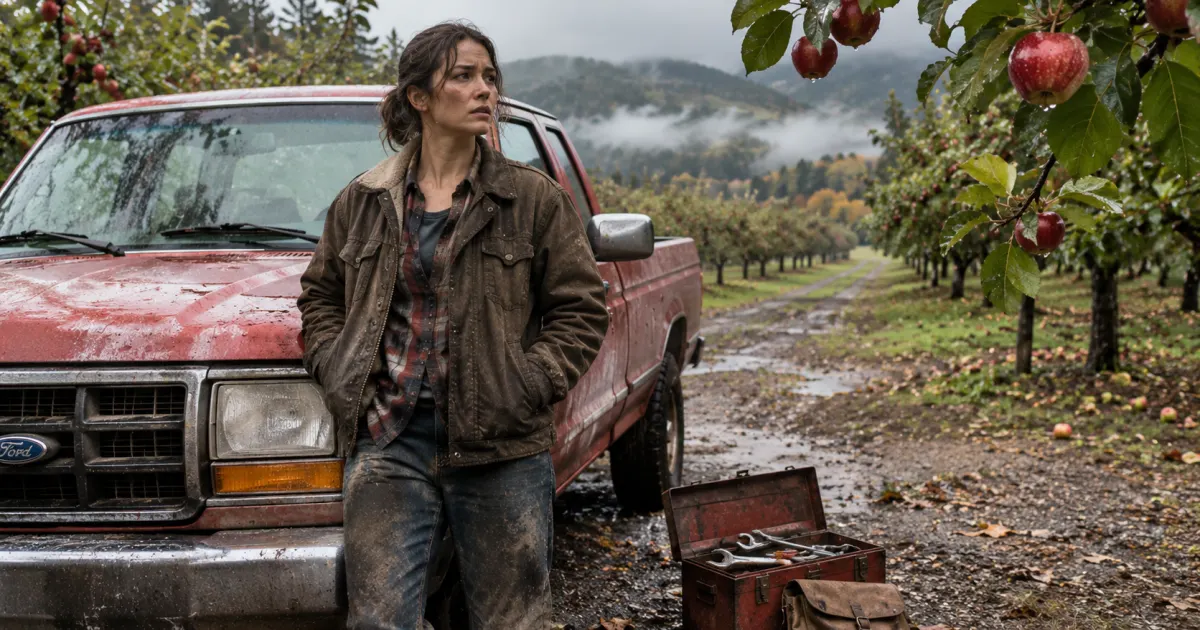
The rain poured through the canopy of leaves as I stood in the mud, staring at the shaky handwriting of a dying man.
I scrambled into the cab of the broken-down truck, grabbed an old battery-operated dictaphone Grandpa kept in the glove compartment, and shoved in the first cassette.
Through the crackle of magnetic tape, my grandfather’s voice from two years ago filled the cab—firm, clear, and desperate.
Thirty years ago, before my father met my mother, he had a brief, turbulent marriage to a woman named Diane Vance in Seattle. They had an infant daughter together. When the marriage fell apart over her severe financial embezzlement and gambling debts, Diane took the baby, changed their identities through fraudulent paperwork, and vanished into California.
That infant was Dylan. And Diane Vance was Evelyn.
Also readRead in commentShe hadn’t married my father seven years ago by coincidence or romantic fate. She had tracked him down after finding out the orchard land had appreciated into prime commercial real estate worth millions. She changed her hair, altered her legal name through three shell corporations, and married my father under false pretenses to claim the land as community property.
When Grandpa Silas discovered her true identity eight months before his stroke, he confronted her in the barn. But Evelyn was prepared: she had blackmailed Silas, threatening to release forged records that would frame my deceased father for tax fraud and destroy the family name if Silas went to the police.
Grandpa couldn’t speak after his stroke, but his mind had remained razor-sharp. He had intentionally signed the bogus amended will that Evelyn forced on him—knowing it would give her a false sense of absolute victory while he hid the irrevocable land deed and title inside an un-tampered land conservation covenant established in 1988.
Under Oregon State law, any agricultural land placed into an irrevocable public trust cannot be transferred, sold, developed, or amended by private will. Silas had left the official recorded trust documents registered under a safe-deposit box at the state bank in Salem, with me named as the sole surviving conservator.
Moreover, the third cassette contained a crystal-clear recording of Evelyn and Dylan whispering in Grandpa’s hospice room the night before he died, discussing how they paid a corrupt mobile notary two thousand dollars to forge Silas’s thumbprint onto the deed.
I didn’t shed another tear.
Instead of leaving town, I hitched a ride with a neighboring farmer into Hood River and walked straight into the Oregon State Police financial crimes unit, accompanied by the district attorney.
The next morning at 10:00 AM, Evelyn and Dylan were standing on the lawn with four representatives from a California development firm, signing the initial $9 million sale memorandum under a white pavilion tent.
Just as Evelyn uncapped her gold fountain pen, two state trooper cruisers and the county sheriff pulled up the long driveway, sirens silent but lights blazing.
I stepped out of the front passenger seat alongside Detective Miller and the county probate judge’s clerk.
“Hannah?” Evelyn laughed nervously, adjusting her designer sunglasses. “I told the deputies yesterday to arrest you if you trespassed. Sheriff, get this girl off my property!”
“Step away from the table, Mrs. Cole—or should I say, Diane Vance,” Detective Miller said, pulling out a pair of steel handcuffs.
Evelyn’s face turned into a mask of pure terror.
The developer dropped his pen, stepping back.
Detective Miller laid out the arrest warrant: “Diane Vance and Dylan Vance, you are under arrest for grand larceny, forged probate documentation, identity fraud, and felony elder abuse.”
Dylan attempted to run toward his sports car parked by the hedge, but two deputies tackled him directly into the wet gravel, pinning him face-first beside the apple crates.
Forensic audits launched that same afternoon froze all of Evelyn’s accounts. State prosecutors uncovered that she had already transferred $600,000 from my father’s remaining retirement accounts into offshore shell entities. Both Evelyn and Dylan were convicted the following spring: Evelyn was sentenced to twelve years in state prison without parole eligibility for elder exploitation, while Dylan received five years for criminal conspiracy and forgery.
The irrevocable 1988 trust took immediate legal effect. The seventy acres of orchard could never be cleared for concrete or luxury subdivisions.
One year later, on a crisp October afternoon, the harvest was the largest our valley had seen in a decade. I restored the old Victorian house, got the 1994 Ford truck running smooth again, and hung a hand-carved cedar sign over the farm entrance:
COLE HERITAGE ORCHARD — ROOTED IN TRUTH SINCE 1924.
And right under the 100-year-old tree by the driveway, where the truth had cracked out of the mud, I planted a bed of white winter roses in memory of Silas and the family name that couldn’t be stolen.
This article is general information, not personal medical or financial advice. Talk to a qualified professional about your own situation.