I Took Care of My Ex-Mother-in-Law for Four Weeks After Her Three Children Refused to Help Then My Neighbor Brought Me a Shoebox and Revealed Her Secret
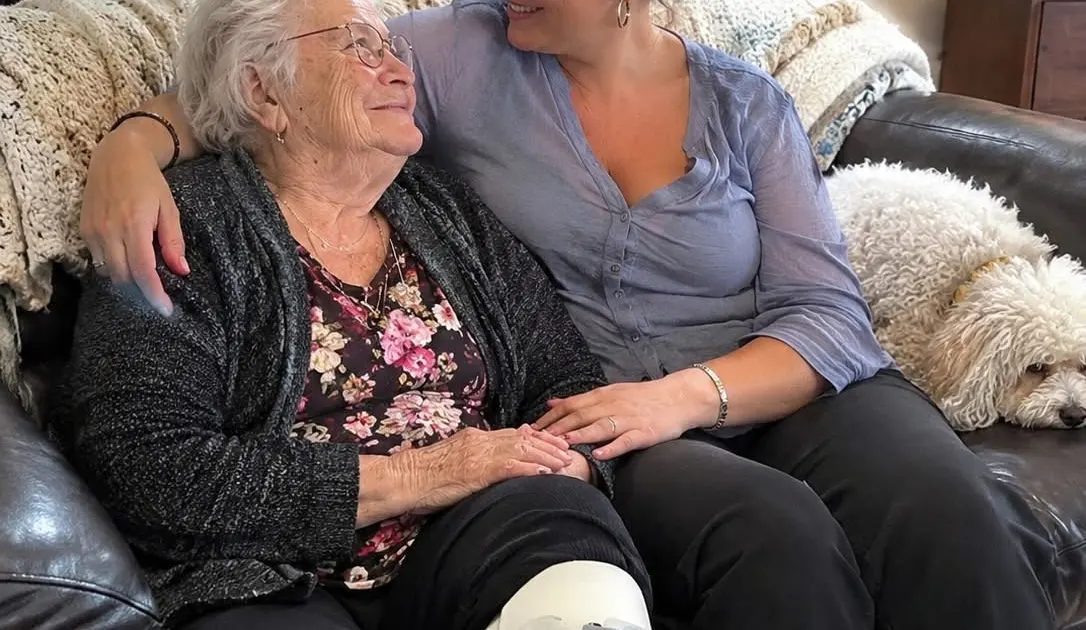
Elora Mercer moved out of my spare bedroom on a Sunday afternoon in October. Her new walking cast was on, her crutches were tucked under one arm, and she had a plastic grocery bag full of the prescription bottles she’d collected during her four weeks under my roof. I carried her suitcase down the front steps. Her friend Marjorie from church pulled up in a silver Camry to take her home, and Elora stood on my walk for a long moment looking back at the house before she climbed in.
Ezoic
“Thank you, Mara,” she said through the open window. “For all of it. I mean that.”
“Call me when you get home so I know you made it.”
“I will.”
She didn’t. I figured she was tired. I went back inside and stripped the sheets off the spare bed and opened the window to air the room out, and I stood there a while with the bundle of sheets in my arms, feeling the strange quiet a house gets when somebody who’s been living in it leaves.
Also readWhy That Milk Jug Dent Exists — The Secret You Never NoticedElora was my ex-mother-in-law. I’d been divorced from her son Shane for five years. That’s not usually the kind of person you move into your spare room when they fall off a stepladder cleaning out their gutters. But Elora and I had always been close, even through the divorce, maybe especially through it. When I found out about Shane’s affair, she was the one who drove over that night with a pan of lasagna and sat at my kitchen table and said, “I’m ashamed of him. I want you to know that.” She never took his side. She sent me a birthday card every year after. Once a month or so, we met for lunch at the Panera on Route 9 and talked about books and her tomato plants and my job at the county library.
Adults Fail This Common Sense
This quiz stumps everyone. Simple questions but only 23% get them all right. Can you?
Ezoic
So when she called me from the hospital in September with a broken tibia, a cast up to her knee, and a voice I’d never heard her use before, I listened.
“The doctor says I can’t be alone for at least a month,” she said. “I can’t do stairs. I can’t drive. I can barely get to the bathroom.”
“What about Daniel? Or Claire?”
There was a long silence on the line.
“Daniel passed, honey. Eighteen months ago. You remember.”
I did remember. I’d sent flowers. I felt terrible for forgetting, even for a second.
“I’m sorry, Elora. I meant Leah. Daniel’s wife.”
“Leah says she can’t. She’s selling the house. Claire’s in Charlotte and says she can’t get the time off work. And Shane…” She stopped. “Shane offered to pay for a home aide. Twenty-two dollars an hour. I don’t want a stranger, Mara. I’m seventy-four years old, and I don’t want a stranger giving me a sponge bath.”
Ezoic
My house is a two-story colonial on Linden Street that Shane and I bought together nine years ago. After the divorce, I bought out his half. It cost me $41,500, refinanced through my credit union, and every month I still feel that payment. It was the one thing I’d fought for in the whole divorce. I couldn’t stand to lose my marriage and my home in the same year. The spare bedroom was on the ground floor, off the kitchen, with its own little bathroom. It used to be a sewing room before I turned it into an office, and before that, a long time before, it had been a maid’s room.
“Come stay with me,” I said.
For four weeks, it was easy. Honestly, it was nice. I made her oatmeal in the mornings before work and left her a sandwich in the refrigerator for lunch. My neighbor Patricia Bell came over in the afternoons and sat with her, and they watched game shows and argued about the answers. In the evenings, Elora and I ate supper together at my dining room table and played gin rummy, and she beat me nine games out of ten.
There were a few odd moments. I’ll admit that now. At the time, I explained every one of them away, because explaining was easier than wondering.
Ezoic
She asked a lot of questions about my schedule. What time I left for work. Whether I ever came home for lunch. Whether Patricia had a key to my house.
One afternoon, the library closed early because of a water main break, and I came home at two instead of five-thirty. Elora was sitting very still at my dining room table with her crutches propped against the chair beside her, and behind her, one of the drawers in my kitchen hutch was standing open. She looked at me like a deer looks at headlights.
“You’re early,” she said.
“Water main broke. Were you looking for something?”
“The deck of cards,” she said. “I thought you kept them in there.”
I keep them on the coffee table. She knew that. We’d played gin rummy every night for two weeks.
Another night, over supper, she set down her fork and asked, very casually, “Mara, do you still keep any of the old paperwork from the divorce? The settlement and all of that?”
Think You’re Smart
50 quick questions. 15 min. Instant score. Prove your common sense now
Ezoic
“In a box in the basement. Why?”
She laughed and waved her hand. “No reason. Forgive an old woman’s curiosity.”
I forgave it. I forgave all of it. I chalked it up to boredom, to pain pills, to the strangeness of being seventy-four and stuck in somebody else’s house with a broken leg.
Then, about three hours after Elora left, while I was folding the clean sheets from the spare bed, the doorbell rang.
It was Patricia.
Patricia Bell has lived next door to me for seven years. She’s seventy-one, a widow, a retired secretary from Lincoln Elementary School, where she ran the front office for thirty-two years and knew every child’s name and every parent’s excuses. She spends her mornings out in her front yard in a straw hat tending to about forty rose bushes, and her evenings on her front porch with a detective novel and a glass of iced tea. She does not gossip. In seven years, I’ve never once heard her say a bad word about anybody on our street, and I’ve given her plenty of chances.
She was standing on my porch holding an old shoebox against her chest with both hands.
“Mara,” she said. “There’s something you should know.” She glanced past me, into the hallway, toward the spare bedroom, like she half expected Elora to come hobbling out on her crutches. “Elora had a reason for staying here. A secret reason. She planned it from the very beginning.”
I stood there with one hand still on the doorknob.
“What do you mean, she planned it?”
“Can we sit down?”
That frightened me more than anything else she could have said. Patricia isn’t dramatic. If Patricia wanted to sit down, it was bad.
I let her in. She carried the shoebox into my living room and set it down very gently on the coffee table, the way you’d set down something that might go off.
It was an old Payless shoebox, faded blue, with one corner split and taped back together with tape that had gone yellow. Across the lid somebody had written a name in black marker.
Mara Ellison.
My maiden name. Nobody had called me that in fourteen years.
“Where did you get this?”
“Elora gave it to me.”
“When?”
“Three weeks ago.”
My head came up fast.
“She gave you a box with my name on it three weeks ago, and you’re only bringing it to me now?”
Patricia winced. “She made me promise. She said, ‘Patricia, if I move out of Mara’s house and I don’t come take this back from you first, give it to her the same day.’ She made me swear on George’s memory.” George was her late husband. “So I did. I put it in my hall closet and didn’t touch it.”
“Did she say why?”
“No. I asked. She just said, ‘Mara deserves to know, and I’m a coward.’”
I sat down on the couch.
Patricia sat across from me in the armchair. “I think you’d better open it.”
“Did you?”
“No, honey. Of course not.”
I took the lid off.
On top was an envelope. Under it were half a dozen photographs, an old brass key with a little paper tag tied on with string, a small leather-bound notebook, and at the bottom, a thick stack of papers tied together with green ribbon, the kind you use on Christmas presents.
The envelope said, in Elora’s careful old-fashioned handwriting: “Mara, please forgive me.”
My mouth went dry. I opened it.
“Mara,” the letter began. “If you’re reading this, then I lost my nerve. I’ve spent five years telling myself that keeping quiet was a kindness. It wasn’t. It was cowardice wearing its Sunday clothes. There are things you were never told about your divorce. Things Shane doesn’t know I know. Things I found out too late. And one thing I did myself, which I have regretted every day since.”
I stopped reading.
“What?” Patricia leaned forward. “What does it say?”
“I don’t know yet.”
My hands were shaking. I kept going.
“I did not break my leg on purpose. At least that much is true. But when the doctor told me I’d need help for several weeks, I realized I’d been handed an opportunity I’d been too frightened to make for myself. My children really did refuse to help me. I wish I could say that surprised me. But staying with you wasn’t only about getting better. I needed to find something. Something I hid in your house five years ago.”
Get Your Trivia Score Now
50 fun questions, instant results in 15 minutes flat.
See Score
Ezoic
I looked up from the page, down the hallway toward the kitchen. My own house suddenly felt like a stranger’s.
“Patricia. She hid something here.”
“What kind of something?”
“I don’t know.”
I read on.
“When your marriage ended, I made a decision without asking you, because I believed I was protecting you. I was wrong. I hid papers inside your house. Recently, I found out somebody else may know they exist. I came to stay with you meaning to take them back out before anyone else could. But living with you, I began to understand that taking them away again would only be the same mistake twice. You deserve to decide what happens next. The papers aren’t in this box. If I found them, you’ll know where. If I didn’t, you may learn the truth from somebody who cares a great deal less about you than I do. Please understand one thing before you judge me. Shane’s affair was real. But it was not the only reason your marriage ended.”
I put the letter down on my knee. The clock over my fireplace ticked. Outside, a car went by slowly on Linden Street.
“What does that mean?” Patricia said.
I almost laughed. It came out as a breath.
“I have absolutely no idea.”
There was one more line on the back of the page. “Start with the photograph from Daniel’s wedding.”
I spread the photographs out across the coffee table. Most of them I recognized right away. Christmas dinner at Elora’s house the first year I was married, everybody in ugly sweaters. A Fourth of July barbecue in her backyard. Shane and me on the dock at Lake Wallenpaupack, sunburned and squinting.
And there it was. Daniel’s wedding.
Daniel was Shane’s older brother. He married Leah eight years ago at a vineyard outside the city, in a heat wave. I remembered that day well. Shane complained about the heat through half the reception. Elora cried through the whole ceremony. I caught the bouquet by accident when the woman in front of me ducked.
The picture was the big family shot under a wooden arbor wound with grapevines. Daniel and Leah stood in the middle. Elora stood beside them in a lavender dress. Claire, the youngest, stood a little apart, the way she always did. Shane and I were on the end, my head on his shoulder.
I studied it. Nothing looked strange.
Then Patricia pointed.
“Who’s that?”
Behind the family, half hidden by one of the arbor posts, stood a man in a dark gray suit. He wasn’t looking at the camera like everybody else. He was looking at Shane.
“I don’t know,” I said.
I turned the photograph over. On the back, somebody had written a name in pencil. Victor Hale. And under it: “Ask Shane why Victor was there.”
I hadn’t spoken to Shane in five years. Not one word, not even a text. Our divorce had been painfully efficient. When I found out about the affair, there wasn’t much left to say. He admitted it. He moved out of our bedroom, then into an apartment downtown. The lawyers handled the rest. We had no children and no business together, nothing complicated to untangle. There was only the house, this house, and I’d bought him out of it.
I picked up the brass key. The paper tag on it said, in ballpoint pen, B-17.
“Storage unit?” Patricia guessed.
“Maybe.”
The little leather notebook was full of dates, most of them from about five years ago. Beside some of the dates were initials. S. D. L. V.H. Beside some of the initials were dollar amounts. $8,000. $12,500. $4,000.
On one of the last pages, I found my own name.
“Mara — don’t let her sign anything until I know what Shane did.”
A chill went down my back. During the divorce, I’d signed a mountain of things. Financial disclosures. The property agreement. The settlement. The refinance papers at the credit union.
I untied the green ribbon from the stack of documents. They were photocopies of bank statements from a company I’d never heard of. Westbridge Consulting LLC, with an address that turned out to be a UPS Store mailbox downtown. The statements covered about two years. Money came in from several construction companies and went out to individual people.
One of the people was Victor Hale.
Another was Shane Mercer.
Over eighteen months, Westbridge had paid my husband close to ninety thousand dollars.
“What did Shane do for a consulting company?” Patricia asked.
“Nothing that I knew about. He sold commercial building materials. Drywall and steel framing. He was a regional sales manager for Keystone Supply.”
At least, that was what I’d always believed.
Under the bank statements was one more document, the company’s certificate of organization from the state. Westbridge Consulting LLC. Registered agent: Daniel Mercer.
Shane’s brother.
I sat back slowly against the couch cushions. This wasn’t just about an affair anymore. The strange thing was, I didn’t feel angry yet. I didn’t understand enough to be angry. All I felt was confused.
“Maybe you should call Elora,” Patricia said quietly.
I already had my phone in my hand.
She answered on the fourth ring. “Mara?”
“Why did you stay in my house?”
There was a silence on the line, the kind of silence you get from someone who’s been waiting for that exact question.
“You found the box,” Elora said.
“Patricia brought it over.”
“I’m sorry, honey.”
“I don’t want an apology. I want an explanation.”
“I can’t do this over the phone.”
“Elora, you spent four weeks living under my roof while you hunted for something you hid in my house during my divorce. You don’t get to be mysterious now.”
“I wasn’t searching the whole time.”
“Is that supposed to make me feel better?”
“No,” she said, and her voice cracked. I heard myself soften, which annoyed me.
“What did you hide?”
“A folder.”
“Where?”
“Inside the wall. In the pantry.”
My stomach dropped. Three years ago, I’d had the pantry redone. The old shelves came out, the drywall behind them was replaced, and new shelves went in. A contractor named Mike Delgado did the work, and he never said a word about finding anything.
“Elora, that wall was torn open three years ago.”
“I know. When I finally managed to get the shelf out last week and look, the patch where I’d put it was gone. New drywall.”
“So somebody found it.”
“I think somebody took it out before your renovation. I don’t know who.”
“What was in it?”
“Papers Daniel gave me. About Westbridge.”
“Why did Daniel give them to you?”
“Because he was frightened.”
“Of what?”
“Mara…”
“Stop doing that. Stop saying my name like you’re getting ready to tell me somebody died.”
Across the coffee table, Patricia looked down at her hands.
Elora took a long breath. “Five years ago, Daniel found out Shane was using Westbridge to move money for somebody. Daniel had started the company for honest consulting work on construction projects. Shane talked him into letting him run his sales commissions through it. Daniel figured out later that they weren’t commissions.”
“What were they?”
“I don’t know everything.”
“Then what do you know?”
“Enough to know Shane was in trouble.” She hesitated. “And then Daniel showed me a paper with your signature on it.”
I stopped breathing for a second.
“What paper?”
“A loan guarantee.”
“I never guaranteed any loan.”
“I know you didn’t. The signature wasn’t yours.”
My fingers tightened around the phone. Somebody had signed my name.
“How much?”
“Two hundred and fifty thousand dollars.”
The number was so big it didn’t feel real.
“Why didn’t that come up in the divorce?”
“Because Daniel stopped the loan before it went through. Then Shane found out Daniel had made copies of the records, and Daniel panicked and gave the copies to me. And I panicked too, and I hid them in your pantry wall. Shane had already moved into his apartment by then. I thought your house was the last place on earth he’d ever look.”
“So you used my house as your hiding place,” I said. “While I was finding out your son had been cheating on me. While I was sitting in lawyers’ offices trying to figure out if my whole marriage had been a lie.”
“Yes,” Elora whispered. “I was trying to protect Daniel. And you. And Shane, too, I suppose. I’m ashamed of that last part.”
I pressed my fingers against my forehead. “Who forged my signature?”
“I don’t know.”
“Do you think it was Shane?”
“I don’t know.”
“That’s not good enough, Elora.”
“No,” she said. “It isn’t.” Then her voice changed. I heard something in it I’d never heard before in fourteen years of knowing her. She was afraid. “That’s why you need to listen to me. When I found out the folder was gone, I almost told you that same day. But then I got a text message, from a number I didn’t know.”
“What did it say?”
She recited it. “You should have left the past where you put it.”
Patricia had heard. Her face went pale.
“Did you call the police?” I asked.
“No. There was nothing threatening in it, not exactly. And I didn’t know who sent it. I left your house today partly because I wanted some distance from you, so if somebody was watching me, they wouldn’t think you were mixed up in it.”
“They already know you stayed here, Elora.”
“I know,” she said heavily. “There’s one more thing. Look at the bottom of the box.”
Patricia and I took everything else out. The bottom looked like an ordinary shoebox bottom. Then I ran my fingers along the edge of the cardboard and felt a seam. Somebody had cut a piece of cardboard to fit and laid it in like a false floor.
I lifted it. Underneath was one more photograph.
This one was new. It showed my house, taken from somewhere off to the side. My Honda was in the driveway. The curtains in the spare bedroom were open, and through the window you could see Elora sitting on the bed, holding something in her hands. On the back somebody had written a date. Six days ago.
Someone had been photographing my house while Elora lived in it.
And down in the corner of the picture, in the reflection off the window of a parked car, you could see the person taking it. The face was a blur. But the jacket wasn’t. It was navy blue with a silver zipper running up the front and a little red tab at the collar. I’d bought that jacket at L.L. Bean seven years ago as a birthday present.
For Shane.
“Elora,” I said. “I think Shane was here.”
She didn’t say anything.
Then somebody knocked on my front door. It was three slow knocks.
Patricia and I looked at each other. The knock came again. I got up and went to the front window and pulled the curtain aside about an inch.
A man was standing on my porch with his back to me, holding an envelope. Even after five years, I knew the shape of those shoulders. I knew the way he shifted his weight from foot to foot when he was nervous. I knew him before he turned around.
Shane looked straight at the window. Then he held up the envelope so I could read what was written across it in big block letters.
“MARA. BEFORE YOU BELIEVE MY MOTHER, READ THIS.”
I didn’t open the door right away. I stood there looking at him through that one-inch gap in the curtain. His hair was shorter than I remembered and going gray at the temples. He was thinner. He looked worn down in a way I didn’t expect. And the strange thing was that seeing him didn’t bring back any of the feelings I’d imagined it would. There was no rush of rage, and no old longing either. Mostly I felt the odd surprise of seeing someone from a former life standing on the porch of the present one.
“Do you want me to stay?” Patricia whispered behind me.
“Yes.”
I opened the door but left the chain on.
“Hi, Mara,” he said.
“Don’t.”
His face tightened. “Fair enough.”
“Why are you here?”
“Mom called me. Ten minutes ago. She said Patricia gave you the box.” He looked past me. “Hello, Mrs. Bell.”
“Shane,” Patricia said. Her voice could have frozen soup.
“Can I come in?”
Get Your Instant Trivia Score in Just 15 Minutes
See Score
Ezoic
“No.”
“Then at least take this.” He slid the envelope through the gap the chain allowed. “It’s a copy of a letter Daniel wrote. Five years ago. I found it last year, after he died. Leah asked me to help clean out his office, and there was a sealed file box with my name on it.”
“What else was in the box?”
“Records. Notes. Copies of contracts.”
“Westbridge?”
His eyes flickered. “So Mom showed you.”
“Did you forge my signature, Shane?”
His whole face changed. “No.”
“Did you know somebody had?”
“No. I found out from Daniel’s papers. Last year.”
“And you expect me to believe that?”
“I expect you to believe absolutely nothing I say until you see proof,” he said.
Most People Fail Q12
50 tricky common sense questions. Takes 15 minutes. See how you stack up.
Take Quiz
Ezoic
That stopped me. The Shane I’d been married to defended himself about everything. Every little disagreement in our marriage turned into a court case. “You said seven.” “I thought you meant around seven.” “I didn’t forget the reservation, I thought you were confirming it.” Even the night I found out about the affair, his first move had been to explain. This Shane just stood there and took it.
“What about the ninety thousand dollars Westbridge paid you?”
His jaw tightened. “I was taking referral fees. From a man named Victor Hale. Daniel’s business partner. I sent him customers from my sales job, contractors who needed short-term loans, and he paid me.”
“The man in the wedding picture.”
“You met him at the wedding. He called himself Vic. You talked to him for about five minutes by the bar.”
I didn’t remember. Weddings are full of strangers.
“Victor and Daniel started Westbridge together,” Shane said. “It was honest at first. Contract review. Procurement consulting. Then Victor started arranging private loans between investors and contractors. Some of them were legit. Some weren’t.”
Beat Your Friends’ Score
50 fun questions, instant results. See who ranks higher among your friends.
Ezoic
“And you were doing business through your brother’s company without telling me.”
“Yes.”
“Why?”
“Because I knew you’d ask questions.”
I stared at him through the gap in the door.
“That’s your explanation?”
“It’s the truth,” he said. “I was selfish. I lied because lying made my life easier. I don’t have a better explanation than that.”
Behind me, Patricia said, “I’m going to make tea,” and went into the kitchen. Neither one of us stopped her.
Most Adults Fail This Common Sense Trivia Quiz
Take Quiz
Ezoic
“Somebody took a picture of my house six days ago,” I said, “wearing your jacket.”
All the color went out of his face. I held the photograph up against the storm door glass, and he leaned in close. Then he frowned.
“That jacket was mine. I gave it to the Goodwill three years ago. I know how that sounds.” He tapped the glass. “But Mara, look again. Whoever took this isn’t across the street. The reflection’s in the side window of Mrs. Bell’s SUV. The angle’s wrong for across the street. They were standing right between your two houses.”
I looked again. He was right.
I unhooked the chain.
“You can come in,” I said, “long enough to explain the rest of those papers. Then you leave.”
Think You’re Smart
50 quick questions. 15 min. Instant score. Prove your common sense now
Take Quiz
Ezoic
He stepped inside. I watched him notice the new floors, the different furniture, the landscape painting hanging where our wedding portrait used to be. He didn’t say anything about any of it.
We sat at the dining room table, and I opened Daniel’s letter.
“Mara,” it began. “If you’re reading this, things got more complicated than I hoped. First, Shane did not forge your signature. I know because I saw the original document before the signature was added. Victor added it later. He got samples of your handwriting from refinance paperwork Shane had given me when we were looking at lowering your mortgage rate. Shane didn’t know what Victor meant to do with it. That doesn’t let my brother off the hook. He made reckless choices. He hid money from you. He trusted people he shouldn’t have. But the loan guarantee was Victor’s work. I caught it before the loan funded, and I stopped it.”
I looked up at Shane. He was watching me, not the letter.
Common Sense Quiz Adults Fail
Test your memory with classic Saturday morning cartoons. Can you name them all?
Take Quiz
Ezoic
“Then something happened that changed everything,” Daniel wrote. “Victor found out about Shane’s affair. And he used it. He told Shane that if Shane ever said a word about what was going on at Westbridge, he’d make sure Mara found out about the affair and about every dollar Shane had hidden from her. Shane chose to stay quiet.”
I set the letter down.
“You knew Victor had forged papers with my name on them?”
“No. I swear.”
“But you knew he was threatening you.”
“Yes.”
“So you let me divorce you thinking the affair was the whole story.”
“Yes.”
“Why?”
“Because once you found out about the affair, you were leaving anyway.”
“That wasn’t your decision to make.”
“I know,” he said.
“You keep saying that.”
“Because I don’t have any excuses left.”
The old anger came then. It wasn’t hot. It was cold and quiet, and it settled down in my chest and stayed.
The letter went on. After the divorce, Victor cut Shane out of Westbridge, and Daniel thought it was over. Years later, he found out Victor had kept using financial information he’d collected from those old deals. “Yours may be part of it,” Daniel wrote. “If anything happens to me before I can fix this, the full records are in the place Mom knows about.”
The place Mom knew about. My pantry wall. Except they weren’t there anymore.
“Shane,” I said. “Why did you finally come here today, after five years?”
He took out his phone and set it on the table between us.
“Seventeen days ago, I got this.”
It was an email from an address that was just a jumble of letters and numbers. One sentence: “Your mother is searching the wrong house.” Under it was a photograph of my pantry, taken from inside my own kitchen, with the bottom shelves pulled out and a square of patched plaster visible on the wall behind them. It was from before my renovation. The old shelves were in it, the ugly yellow ones.
“Who took that?” I whispered.
“I don’t know. I drove over here twice after I got it. Both times I sat in my car down the block and couldn’t make myself knock. What was I supposed to say? ‘Hi, it’s me, your ex-husband, somebody might have hidden evidence of a fraud in your kitchen’?”
I got up and walked into the pantry. The shelves looked normal. I ran my hand along the new wall. Nothing. Then I crouched down and looked at the baseboard along the bottom. I’d painted the pantry six months ago, and I’d painted carefully, over every screw head on the trim so they wouldn’t show.
One screw head at the end of the baseboard, down near the floor, was bare metal. Somebody had loosened it before I painted, and my brush had skipped it.
“Shane. Do you have a screwdriver in your car?”
“Do you not have a screwdriver?”
“Just get one from my junk drawer.”
He came back with one and knelt and took out the two screws at that end of the trim. The baseboard came loose. Behind it, between the bottom of the drywall and the floor, there was a narrow gap. Inside was one folded sheet of paper.
I reached for it. Shane caught my wrist.
“Wait. Use gloves.”
I almost laughed at him. Then I went and got my yellow dishwashing gloves from under the sink and pulled the paper out.
It was a photocopy of a legal document. At the top, it said TRANSFER OF BENEFICIAL INTEREST. My name was halfway down the page, and Shane’s, and Victor Hale’s.
The fourth name didn’t make any sense at all.
Patricia Bell.
I turned around slowly. Patricia was standing in the kitchen doorway with the teapot in her hands, and her face had gone white as paper.
“I’ve never seen that before in my life,” she whispered.
Then she stared at it for a long time, and something changed in her face, like a memory she’d buried was climbing up out of the ground.
“Oh, no,” she said.
“What?”
She set the teapot down on the counter very carefully and sat down hard in one of my kitchen chairs.
“Mara, I think I know where I’ve seen Victor Hale before. He came to my house to see George. The week before George died.”
Patricia had been my neighbor for years before she was my friend. There’s a difference. Neighbors know when you leave for work and whether you forgot to bring your trash cans in. Friends know which of your silences mean sad and which mean angry. I’d become Patricia’s friend slowly, over borrowed hedge clippers and power outages and cups of coffee over the fence. But I knew almost nothing about her husband. George had been an accountant, and he died of a stroke nine years ago, two years before I moved in. That was about all she’d ever said.
“George worked for himself near the end,” she said now, sitting at my kitchen table. “Small businesses, mostly. Bookkeeping, taxes.”
“Was Daniel one of his clients?” Shane asked.
“Not that I knew of.”
“And Victor?”
“About a week before George died,” Patricia said, “a man came to our house one evening. I remember because George hated clients coming to the house. He liked to keep work at work. Tall man, dark hair, very nice overcoat.” She looked at the wedding photograph. “Younger then. But yes, I think that’s him. They were in George’s study with the door shut. They raised their voices. I heard George say, ‘I won’t put Patricia’s name on something she hasn’t seen.’ Afterward I asked him what that meant, and he said it was a client problem and not to worry about it.”
Think Fast: Common Sense Test
50 questions. The answers seem obvious. Are they? Free to play.
Start Now
Ezoic
“And a week later he had the stroke,” I said.
“Yes.” Her eyes filled with tears, but she didn’t look away. “At the hospital, they said it could’ve happened to anybody. High blood pressure. His age. Stress.”
“Patricia,” Shane said gently, “there’s no reason to think Victor had anything to do with George’s death.”
“I know that,” she said quickly. “I know.”
It would have been easy to turn every coincidence into a monster in the dark. But real life is usually messier than that. People die of strokes. People hide paperwork. Bad choices and ordinary bad luck pile up on top of each other, and the hard part is telling them apart.
“Do you still have George’s records?” I asked.
“Some. Up in my attic.”
“Tomorrow morning,” I said. “In daylight.”
The next morning at nine, the three of us climbed the pull-down stairs into Patricia’s attic. Shane came. I hadn’t exactly invited him, but he showed up on my porch at eight-thirty with a box of donuts from Dunkin’, and Patricia said, “Oh, let him come, we need somebody tall.”
It was hot and dusty up there, with sunlight coming in through a little round window at the end. There were twelve cardboard boxes in the corner marked GEORGE — OFFICE in Patricia’s handwriting. We spent almost two hours going through them. Tax returns. Old invoices. Payroll records for a dry cleaner and two dentists and a landscaping company. Nothing about Victor.
Then Shane pulled a ledger out of a box marked HOUSEHOLD.
It wasn’t professional bookkeeping. It was George’s own private notebook, full of dates and names and questions, written in a cramped accountant’s hand. On a page from nine years ago, he’d written: “V. Hale — won’t disclose investors. Wants P. listed as contingent beneficiary. WHY?”
Three days later: “D. Mercer called. Young. Nervous. Says V.H. using duplicate agreements. Need to verify.”
Patricia put her hand over her mouth. “George knew Daniel. He never said a word.”
The last entry was dated two days before George died, and he’d underlined it twice.
“If anything happens, copies not here. Safe deposit 317. Key with P.”
All three of us turned and looked at Patricia.
“I don’t have any key,” she said.
Then I remembered the brass key in the shoebox with the B-17 tag.
We went back to my house. I took the key out of the box and slid the paper tag off its string. Underneath, stamped faintly into the brass, there was a number. 317.
“Elora,” Patricia said. “Elora had George’s key.”
It took us most of the afternoon to figure out where box 317 was. It wasn’t at any of the banks George had used. Then Patricia remembered a private document storage company George sometimes used for clients’ records, a place called Briar Storage out on the industrial road, in a set of low brick buildings. The key’s tag said B-17. B for Building B.
Briar Storage had changed its name twice since then and was now called SecureVault Records. But the manager, a heavyset woman named Denise with reading glasses on a chain, said they still kept the old legacy boxes from the original customers. Patricia showed her driver’s license and George’s death certificate, which she’d brought in a plastic sleeve. Denise went into the back. When she came out, she was carrying a long, narrow metal box with 317 stenciled on the end.
Patricia held the key for a long moment.
“You want me to do it?” I asked.
“No,” she said, and turned it.
Inside were envelopes, a little black flash drive, several contracts with notary seals on them, and a handwritten note addressed to Patricia.
“My dear Pat,” it said. “If you ever have reason to open this, then a work problem got more personal than I expected. I’m sorry I didn’t tell you. You would have worried, and I talked myself into believing I could handle it quietly. That was pride, not protection.”
The words were so close to Elora’s letter that something shifted inside me. They were different people making the same mistake, and both of them called it protection.
George had written out what he’d found. Victor had asked him to review some investment agreements. George discovered there were two versions of every contract. The investors signed one set and the borrowers signed another, and afterward, terms got changed, names got added, and ownership interests got moved around. George refused to have anything to do with it. Then he called Daniel Mercer, because Daniel’s company was on several of the contracts. Daniel was horrified. The two of them started collecting copies.
One of the agreements involved a residential property. When I read the address, I felt cold all over. It was my house, on Linden Street.
Victor had planned to use my house as collateral for a loan through Westbridge, with my forged signature on the guarantee. George had blocked one piece of it. Daniel stopped the loan itself.
Back at my house that night, Shane put the flash drive into my laptop. It held scanned contracts, signature pages, and a long string of emails between Victor and Daniel. One of Daniel’s emails said, “You used my brother’s wife because you thought Shane would be too ashamed to tell her what he’d done. You were right about him. You were wrong about me.”
Shane stared at that sentence for a long time. I didn’t comfort him. But I understood what hurt. His brother had seen him clearly, maybe more clearly than he’d ever seen himself.
There was one more email. It was from Victor to Daniel. “Destroy the copies. Your mother doesn’t need to know what her sons have done.”
Daniel’s reply was three words. “She already knows.”
Elora had known before my divorce was even final.
I closed the laptop. “I need to talk to her. Without you, Shane.”
He nodded. He didn’t argue.
Patricia came with me. Elora opened her front door on her crutches, and the second she saw the brass key in my hand, her shoulders sagged.
“You found George’s box.”
“You knew Patricia’s husband?”
“Only a little. Daniel brought him to my house once.”
Patricia stood very still in Elora’s front hall. “You knew George was trying to expose Victor. And you never told me. For nine years.”
Elora lowered her eyes. “I was afraid telling you would drag you into something dangerous.”
Patricia didn’t yell. That surprised me. She just said, very quietly, “People keep deciding what I can survive without asking me.”
Elora flinched. So did I, because that sentence wasn’t only about Patricia. It was about all of us. Shane had decided I didn’t need to know. Daniel had decided his mother should hold the evidence. Elora had decided my wall was safer than telling me. George had decided Patricia shouldn’t worry. Every secret had been called protection, and every one of them had taken somebody’s choice away.
“Where’s the folder you hid in my house, Elora?”
“I don’t know.”
“Who else knew where it was?”
“Only Daniel.” She hesitated. “And Leah. Daniel told her before he died.”
Right then, a car door slammed in Elora’s driveway, then another. Patricia went to the window.
“Someone’s here.”
A woman in an elegant gray wool coat was coming up the front walk. Dark hair pulled back, sunglasses. I knew her from a hundred family pictures. Leah, Daniel’s widow.
She knocked once and called through the door. “Elora, I know Mara’s in there. I didn’t take the folder.”
Elora gripped her crutch.
“Daniel did,” Leah said through the door. “He took it out of your wall himself, Mara. Before your renovation. Because he’d found out something worse than anything Victor did.”
I opened the door.
Leah looked straight at me. Her eyes were red.
“Someone in this family was helping Victor the whole time,” she said. She looked past me at Elora. “Your daughter.”
Elora had three children, and in my head I’d always thought of them in order. Daniel, the responsible oldest. Shane, the charming middle one. Claire, the youngest, who lived in Charlotte and almost never came home. Christmas cards instead of Christmas dinners. Short phone calls on birthdays. A visit every couple of years. She worked in commercial real estate, and I’d never really understood what that meant. Now I understood enough to be scared.
“Claire barely knew Victor,” Elora said.
“She knew him before Daniel did,” Leah said.
She’d brought a folder, and unlike the mess in Elora’s shoebox, everything in it was neat and dated, with tabs. Emails, contracts, and a timeline she’d typed up herself.
“I’ve been putting this together for a year,” Leah said.
“Why didn’t you tell anybody?”
“Because I didn’t know who to trust.”
I almost laughed. That sentence had become the family motto.
Shane showed up twenty minutes later. Patricia had texted him. He stopped in the doorway when he saw Leah.
“What’s going on?”
“We’re finally telling the truth,” Leah said.
For the next hour, Elora’s dining room table turned into a place where five years of assumptions fell apart one by one.
Ezoic
Claire hadn’t invented Victor’s scheme. She wasn’t some mastermind. The truth was more ordinary than that, which made it easier to believe. She’d profited from it. Victor found properties likely to shoot up in value and set up confusing loans with owners who often didn’t understand what they were signing. Claire did the research on which properties to target. Daniel’s company gave the whole thing an honest-looking face. Shane sent Victor borrowers. At first, each of them saw only their own little piece of the machine.
“Why my house?” I asked.
Shane answered before Leah could. “Because I told Victor we were having money problems.”
I turned to look at him. “What money problems?”
“Mine. Credit cards. A stock investment that went bad. About forty thousand dollars altogether. I kept separate accounts you didn’t know about.”
The affair had stopped hurting years ago. This hurt in a different way, and it wasn’t because of the amount. It was realizing how little I’d known about the man sleeping next to me every night.
“I wanted you to think I made more money than I did,” Shane said. “Pride. That’s all it was.”
“So Victor offered you a way out.”
“Referral fees. Then he said he could refinance some things using the equity in our house. I told him no. I swear I told him no. The paperwork with your signature on it was for a real refinance Daniel was helping me price out. I never agreed to use the house without you.”
I believed him. That surprised me. It wasn’t because he’d earned my trust. It was because the documents backed up what he said. A person can betray you deeply without being guilty of every betrayal there is.
“When Daniel found the forged guarantee,” Leah said, “he cut Victor off. Claire defended Victor. She had money tied up in several developments. Including your neighborhood, Mara.”
There it was. My house hadn’t been chosen because of me. It had been chosen because of where it sat. Three blocks from my street, a developer had already torn down a row of old houses to put up townhomes and a coffee shop. My lot sat near the middle of the next proposed phase. I was just the signature attached to the property.
Leah pulled out one more email, from Claire to Victor, six years old. “Mara won’t question the appraisal. Shane handles their finances. If you need the house documents, I’ll get them through Mom.”
Elora covered her mouth. “No.”
“Did you give Claire anything?” I asked her.
“She asked me for a copy of your house appraisal once,” Elora whispered. “She said Shane needed it. I gave it to her. I’d forgotten all about it.”
Claire had used everyone’s habits. Shane’s secrecy, Daniel’s trust, Elora’s instinct to help her children, and my willingness to let Shane handle paperwork because I believed marriage meant being on the same side. There was no big dramatic conspiracy, just small weaknesses that happened to line up exactly wrong.
“Where’s Claire now?” Shane asked.
Elora swallowed. “She flew in yesterday. She said she wanted to see me after my injury.”
“After refusing to help you for four weeks,” Shane said.
Nobody said anything to that.
That afternoon, I called a lawyer. It wasn’t my divorce lawyer. A coworker at the library had a sister who worked in financial fraud, and she gave me a name. Nina Park. Nina listened to me for forty minutes without interrupting once.
“First,” she said, “nobody contacts Victor Hale. Second, you preserve everything. Every original paper, every file, every photo. Don’t throw anything away, and don’t mark anything up. Third, you file a police report about the photograph of your house and the possible identity fraud. And fourth, I’m ordering a full title search on your property today. People assume an old failed deal means there’s no risk. Property records can have options or assignments or liens on them that regular homeowners never see.”
The title search came back the next morning. There was no mortgage I didn’t recognize and no secret ownership transfer. I let out a breath I felt like I’d been holding for days.
Then Nina pointed at the screen. “Here.”
It was an older filing, a memorandum of option on my property, recorded six years ago and released four years ago. The company holding the option was called Vantage Urban Partners.
“Who owns that?”
“The original manager was Victor Hale,” Nina said. “The current manager is Claire Mercer.”
Shane closed his eyes.
“It was released,” Nina said, “so your house isn’t tied up by it now. But somebody filed an interest in your property without you knowing. And your signature isn’t on it.” She paused. “Shane’s is.”
Shane stared at the copy she pulled up. “That’s my signature. But I’ve never seen this document in my life.”
“Then we treat it as unauthorized,” Nina said. “My guess is Victor lifted a real signature from something you signed for him once and reused it.”
That evening, Claire came to her mother’s house, because Elora finally called her and said, “Come over. We need to talk about Victor.” That was all it took.
She walked in carrying a travel mug, looking mildly inconvenienced. Then she saw all of us at the dining room table, Leah’s folder and the shoebox and the brass key, and she stopped.
“Sit down,” Elora said.
“Mom…”
“Sit.”
Claire sat.
“How long?” Shane asked.
She didn’t pretend not to understand. “A long time.”
“You helped Victor use Mara’s house,” Elora said, and her voice broke.
“There was never supposed to be a forged loan.”
“That’s not much of a defense,” I said.
“I’m not defending it.” She looked at me. For years she’d just been a far-off former sister-in-law. Now she looked older, and tired. “Yes, I gave Victor information about your house. No, I didn’t know he’d used your signature until after Daniel caught it. And when I found out, I did nothing. Victor told me the loan was canceled and the papers were destroyed, and I wanted to believe him.”
“Did you make money?”
“Yes. Enough that admitting I’d been wrong would have cost me almost everything I had.”
There was no evil in it, just fear and greed and pride, the usual crew.
“Leah got seven hundred and fifty thousand dollars from Vantage Urban Partners after Daniel died,” Shane said. “Was that you?”
Claire looked surprised. “No. That was Victor’s lawyers, buying out Daniel’s share of Westbridge before Victor left the country. I only became manager of Vantage afterward. I thought I could clean up the mess myself.” She looked around the table. “You don’t know, do you? Nobody’s heard from Victor in almost three years. He moved overseas when investors started suing him.”
“Then who sent me that email?” Shane said.
He showed it to her. “Your mother is searching the wrong house.”
Claire read it twice. “That wasn’t Victor. Victor wouldn’t have any idea Mom was searching anything.” She reached into her purse and pulled out a small envelope. “I got this in the mail at my hotel yesterday. That’s why I came to see Mom.”
It was a photograph of Daniel, taken not long before he died. He was standing outside the train station downtown, holding a faded blue shoebox under one arm. On the back, somebody had written: “He didn’t hide the evidence. He gave it away. Ask Mara who owned her house before she did.”
“I know who owned my house,” I said. “We bought it from an older couple. The Hendersons.”
“They lived in it,” Shane said quietly. “But they weren’t the legal owner.”
Nina confirmed it the next day over a video call, with Patricia and Shane and me crowded around my laptop at the dining room table. Before Shane and I bought the house, it had been held in a small family trust. The Hendersons were the beneficiaries. They had the right to live in it and eventually sell it. The trustee, the person whose name was on the legal paperwork, was George Bell.
Patricia stood up from the table and walked into my living room and stood there looking around at the walls she’d been inside a hundred times.
“George was the trustee on this house,” she said. “He never said a word.”
“It might have been routine client work,” Nina said gently.
But we all knew by then it hadn’t been entirely routine. George had looked into Victor. Daniel had worked with George. My house had ended up in Victor’s scheme. The house connected all of them before I ever knew there was a connection.
“Daniel’s note said he gave the evidence away,” I said. “Maybe to George?”
“George died years before Daniel,” Shane said.
Then Patricia turned around.
“Not to George,” she said. “To me.”
She hurried out my front door and across the lawn to her own house. We followed her. She went straight to the cabinet under her staircase and started pulling things out. Photo albums, candles, a box of Christmas ornaments. At the very back was a big wooden recipe chest, the old-fashioned kind with brass corners.
“Daniel brought me this after George’s funeral,” she said. “He said George had ordered it for me as a surprise before he died. A recipe box with my initials on it. I cried for an hour.” She set it on her kitchen table. “Then about four years ago, Daniel came by one afternoon. Out of nowhere. He said he was in the neighborhood and wanted to see how I was doing. He asked if I still had the recipe box. I went to make him coffee, and he was in the hallway by himself for a good ten minutes. I thought he was looking at George’s pictures.”
She opened the lid. The front was packed with index cards, her mother’s recipes and her own. She lifted them out in handfuls. The bottom of the chest was too thick. Shane saw it right away.
“False bottom.”
Under the wooden panel was a sealed plastic sleeve with George’s handwriting on the front: “For Pat — open this if Daniel says it’s time.”
And under that, tucked in sideways, was a manila folder that wasn’t George’s.
Elora recognized it instantly. She’d come over behind us, on her crutches. “That’s it. That’s the folder I put in Mara’s wall.”
Daniel had never told Patricia it was time. Maybe he thought the danger had passed. Maybe he lost his nerve. People are rarely consistent enough to be all hero or all villain.
The folder filled in the rest of the picture, precisely, with nothing dramatic about it. Victor’s whole network of property options and private loans, some honest, some built on misleading paperwork, a few with outright forged signatures. Claire’s research and introductions. Shane’s referrals. Daniel’s company, lending its name until Daniel found the forgery with my name on it, and that changed him.
That left only one question. Who’d been sending the messages?
Two weeks later, Shane got another anonymous email, this one with a phone number in it. Nina told him not to call it. She gave it to the detective handling my police report instead. The number belonged to a prepaid phone bought at a Walgreens on the east side. The store’s security footage showed the woman who bought it.
It was Leah.
We met her at Nina’s office downtown, in a conference room with a long glass table and a view of the river. Leah sat across from us with her hands folded. She didn’t deny any of it.
“Why?” Shane asked.
“Because none of you would tell the truth.”
“So you scared Mom half to death?”
“I never meant to scare her.” Leah’s voice was steady. “I sent the text. I sent your email. I took the picture of Mara’s house, from between her house and Patricia’s. I never went inside. The old pantry photo was one Daniel took years ago. I found it in his files.”
“Why the jacket?” I asked. “Shane’s jacket?”
She actually looked embarrassed. “I didn’t know it was his. I bought it at the Goodwill on Ridge Road for eight dollars because it was cold that morning.”
It was almost funny. Real life sometimes is.
“Why do any of it?” Elora asked.
Leah’s composure finally cracked.
“Because Daniel spent his last years carrying all of this by himself. I told him he didn’t have to. He’d say Shane would lose everything, Claire would lose her career, his mother would blame herself, Patricia would have to relive George’s death all over again, and Mara had already been through enough.” She looked at me. “He kept finding reasons why nobody else should know. And after he died, I found pieces of it. Enough to understand he’d spent years trying to fix everybody else’s mistakes, and it was too heavy for him.”
“Then why not just come to us?” Shane said.
“Because I was angry,” Leah said, and there it was, something simple and human at last. “I wanted all of you to feel what I felt. Confused and shut out, scrambling around in the dark for answers.”
Patricia looked at her for a long time.
“You could have knocked, honey,” she said.
Leah looked down at the glass table.
“Yes,” she said.
Nina worked with the investigators for months after that. Some of what had happened was too old to do anything about. Some of it wasn’t. Several of the forged filings became part of a bigger financial investigation into Victor’s old companies. Claire hired her own lawyer and turned over every record she had. There was no dramatic arrest, no cameras or handcuffs. She cooperated and eventually settled the civil claims tied to the deals she’d been part of. She lost her job in Charlotte. Her relationship with her mother changed. The consequences came slowly, through paperwork and hard conversations instead of any big scene, and that felt more honest to me somehow.
Shane and I finally had the conversation we’d been avoiding for five years. It happened on my front porch one evening in November, after everybody else had gone home. The sky was turning purple over the rooftops on Linden Street. He stood by the porch railing with his hands in his pockets.
“I owe you more apologies than I know how to give,” he said.
“Probably.”
“I used to think the worst thing I ever did was cheat on you.”
“It was pretty bad.”
“I know.”
“But that’s not what’s been bothering me most these last few weeks,” I said.
“What is?”
“Finding out how many decisions you made for me.”
He was quiet a long time. “I thought hiding the money mess would keep you from worrying.”
“You thought keeping me from knowing was the same as keeping me from getting hurt.”
“Yes. And I was wrong.”
“I don’t need you to keep apologizing, Shane.”
“What do you need?”
“Nothing,” I said. He looked surprised. So was I. For five years I’d imagined that closing this door would take something from him, an explanation or an apology or a confession. Sitting there on my porch, I realized it didn’t. It was just getting to a point where the old unanswered question didn’t get to decide what happened next.
“I might forgive you someday,” I said. “I might have already forgiven some of it. That doesn’t mean I want you back.”
“I know,” he said, and for once I believed he did.
Elora came over two days later. She knocked on my door without a suitcase this time, no broken leg and no secret plan. I made coffee, and we sat at my kitchen table.
“I used your home,” she said. “I told myself I was protecting you. I should have trusted you with your own life.”
That was the apology I needed. It was specific, and it named what she’d done.
“Yes,” I said. “You should have.”
Her eyes filled. “I was so scared you’d never speak to me again.”
“I thought about it.”
She gave a tiny laugh through her tears. “I suppose I deserved that.”
“I don’t know what anybody deserves anymore, Elora.”
“Then why did you let me come over?”
“Because caring about somebody doesn’t just stop because they let you down.”
She reached her hand across the table. She didn’t grab mine. She just set hers down near it, giving me the choice.
After a minute, I put my hand over hers.
Patricia changed after all of it. I expected her to be sadder, and she wasn’t. She was lighter. For nine years, she’d remembered George’s last week as perfectly ordinary. Now she knew he’d spent it wrestling with a hard decision, trying to do the right thing.
“Badly, maybe,” she said one morning while she pruned her roses and I held the trash bag for the clippings. “But he was trying.”
“Most of us do it badly.”
“That’s very philosophical for nine in the morning, Mara.”
“I’ve been reading your mysteries.”
“Well, stop,” she said. “We’re unbearable.”
In December, I decided to repaint the pantry. Patricia came over with brushes and a drop cloth. Elora brought turkey sandwiches from the deli on Route 9. Shane stopped by to return a folder Nina had borrowed, and he stood on my porch until I told him he could come in.
The four of us stood in my kitchen for a moment, not quite knowing what to say. Claire wasn’t there. Leah still wasn’t ready to face Elora. Some things stayed broken, and some changed shape.
Shane left first. At the door he turned around. “Take care of yourself, Mara.”
“You too.”
He walked down my front path to his car, and that was all.
I realized I was smiling. Patricia noticed.
“What’s that about?”
“I think I just figured out he’s part of my past now instead of something unfinished.”
Elora looked down at the floor. “Does that include me?”
I thought about it.
“No,” I said. “But things are different.”
“I know.”
“Maybe different is good.”
She smiled. “Maybe.”
We worked until late afternoon. When the shelves were off the wall, I stood and looked at the spot where Elora had hidden the folder five years earlier. You could still see the faint outline of the old patch under the new paint. I painted around it first, carefully, then over it. By the second coat, it was gone.
Three weeks later, a few days before Christmas, Nina called me at work.
“Mara, there’s something you need to see. Don’t panic.”
“Everybody says that right before they tell you something terrible.”
“This isn’t terrible. It’s from Daniel. He left a sealed envelope with his own attorney, with instructions that it stay sealed unless your house was ever sold. The attorney’s retiring and transferring his old files, and he recognized Daniel’s name from the investigation. He called me.”
“I’m not selling my house.”
“I know. I think you should read it yourself.”
An hour later, I sat in Nina’s conference room with the envelope in my lap. The first page was about Victor. The second was about Claire. The last paragraph was something else entirely.
“If Mara ever finds out the truth about Westbridge,” Daniel had written, “she may also find out what Mom has kept from her. I don’t know if I have any right to tell it. It has nothing to do with money, and nothing to do with the house. It started before Mara ever married Shane. Mom knew Mara’s father.”
I stopped breathing.
My father died when I was fourteen. He was a high school science teacher in Scranton, and he died of a heart attack shoveling snow in our driveway. In fourteen years of knowing Elora Mercer, she’d never once mentioned knowing him.
There was a photocopied photograph clipped to the letter. Two young people stood on a wooden dock beside a lake, squinting into the sun. One was my father, maybe twenty-three, with his arm around the girl next to him. The girl was Elora.
On the back, in my father’s handwriting, which I’d know anywhere, was one line. “Elora, keep this until Mara is ready.”
There was one more thing in the envelope. It was a key, a new one, with a plastic tag hanging from it. The tag said: Ellison Family Trust.
My maiden name.
I sat there holding it for a long time. My phone buzzed on the table. It was Elora.
I let it ring three times. Then I picked up.
Neither of us said anything at first.
“Daniel’s attorney called me,” Elora said finally.
“So you know.”
“Yes.”
“Did you know my father?”
There was a long silence on the line.
“I knew him before I ever had children,” she said. Then she started crying, and when she could talk again, she said, “Come to the house, Mara. Please. I’ll put the coffee on. It’s a long story, and I should have told it to you twenty years ago.”
I put the key in my coat pocket and the photograph in my purse and drove across town to Elora’s in the dark. She’d turned the porch light on, and she was standing in the open doorway in her old blue cardigan, leaning on one crutch, waiting for me.
This article is general information, not personal medical or financial advice. Talk to a qualified professional about your own situation.