Four Months After My Brother Sold Our Father’s Wristwatch For Bar Money, A Stranger Stood On My Mother’s Porch Holding A Velvet Box, And What Came Out Of That Day Changed Every One Of Us
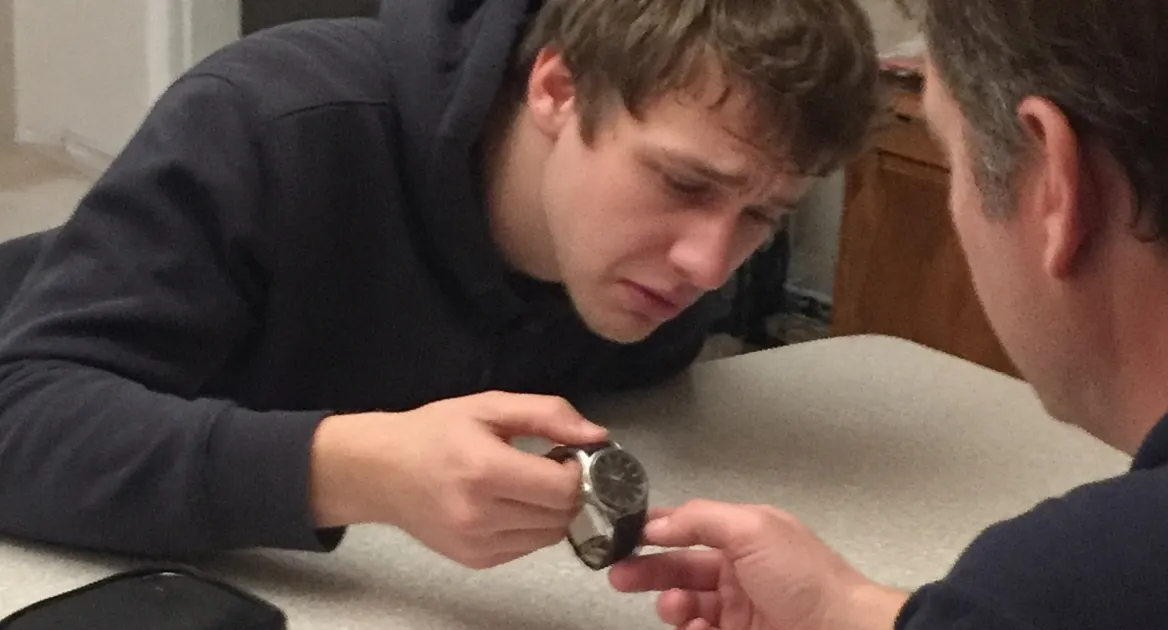
My father wore that watch for forty-eight years, and in all that time I cannot remember a single photograph, a single holiday, or a single ordinary evening in which his left wrist was bare. It was nothing special to look at. The case was plain steel, worn smooth at the corners, and the glass carried a thin scar across its face from some forgotten Tuesday on the mill floor. The strap was brown leather, and he replaced it whenever the old one cracked, which was usually every three or four years, always with the same inexpensive kind from the same hardware store on the corner. He bought the watch in the spring of 1977, in the very week he carried home his first paycheck from the steel mill, because he had decided that a man who clocked in for a living ought to own something that kept honest time. He wore it to his wedding, where it flashed beneath a rented cuff while he promised my mother the rest of his life. He wore it into the delivery room twice, once for me and once for my brother, and he liked to tell us that he had checked it at each of our births and scribbled the minute on the back of his hand, because the nurses were too busy to say. He wore it to his retirement dinner, where the mill gave him a plaque, a handshake, and a slice of sheet cake, and where he spent most of the evening glancing at the hour, not out of boredom, but because he was already homesick for the early shifts. And on a gray morning in September, when his heart simply stopped while he sat at the kitchen table with his coffee, he was wearing it still. The funeral home returned it to my mother in a clear plastic bag, together with his wedding band and a folded handkerchief, and I watched her stare at those three small things as if she could not understand how so much of a man could fit inside a sandwich bag. She carried the watch upstairs herself. She laid it on the dresser beside his reading glasses, in the exact patch of wood where he had set it down every night for as long as I could remember, and she squared the two objects so they sat side by side, the way a person sets a place at the table for someone who is only running late.
My brother Brian had never been a bad person, exactly, but he had been in some kind of trouble for most of his adult life, and the trouble had always had a number attached to it. By that autumn he was forty-four years old and eighteen years into a pattern that our family had stopped calling by its real name. There had been a failed landscaping business, then a truck he could not afford, then a string of loans from people who did not send polite letters when they were not repaid. Dad had pulled him out of the hole five separate times that I knew about, and probably more that I did not, and each time he had done it quietly, at the kitchen table, with a checkbook and a long silence, never once raising his voice. My mother used to say that Walter did not rescue Brian because he was soft. He rescued him because he could not bear to watch a person he loved go under in front of him. After the funeral, Brian offered to stay at Mom’s house for a week to help her sort through Dad’s things, and none of us had the energy to say no. He slept in his old bedroom with its faded pennants. He carried boxes to the garage and answered the sympathy calls and ate whatever the neighbors left on the porch. I told myself it was a good sign. I told myself that grief was doing what nothing else had managed to do, and that my brother might finally be growing into the man our father had spent a lifetime hoping he would become. Then he packed his duffel bag on Sunday afternoon and drove away, and on Monday morning my mother stood in her bedroom doorway looking at the dresser, and the watch was gone.
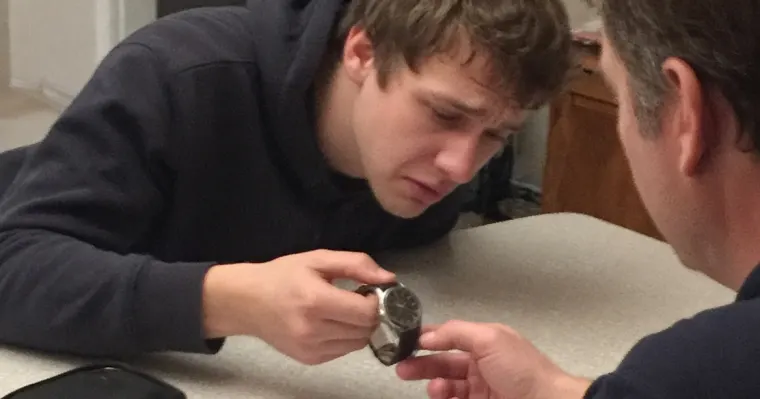
She called me at seven o’clock, and I could hear that she had been crying for a while. “Maybe I moved it,” she said. “Maybe I put it in a drawer and forgot. Maybe I am losing my mind, Laura.” I told her to sit down and drink some water, and I drove to her house in my pajama pants with my coat thrown over the top. We searched every drawer, every pocket of Dad’s old jackets, the bathroom cabinet, the sewing basket, even the freezer, because my mother had once put her keys there during a bad week. We found nothing. She was not losing her mind, and I knew it before I finished the second drawer. I stepped onto the back porch and called my brother. “Dad’s watch,” I said. “Where is it?” A long silence stretched across the line, long enough for me to hear a television murmuring in the background and a car door slam somewhere on his street. Then he said, in a voice that was too light and too fast, “It was a cheap watch, Laur. It was worth thirty bucks. I needed gas money.” My hand tightened on the railing. “You sold it.” “It was just going to sit in a drawer forever. Dad would not have cared.” I did not scream, though I wanted to. I told him that Dad had worn that watch for forty-eight years, that it was the last thing his skin had touched, and that Mom was upstairs at that moment pulling out sweaters one by one in the hope that she had misplaced it. He said he was sorry, in the way that people say it when they are not yet ready to feel it. Then he said he had to go, and he went.
I found out later that he never made it to the gas station. That same night, he sat at the bar of a tavern called the Rusty Anchor, three miles from my mother’s house, and he spent every dollar he had received on rounds for men whose last names he did not know. Thirty-five dollars for forty-eight years. The bartender told a friend of mine, who told me, that Brian had stayed until closing, mostly quiet, staring at his hands. In the days that followed I drove to every pawn shop and secondhand store in the county, with Dad’s picture on my phone and my heart in my throat. I stood in dusty back rooms that smelled of old coats and machine oil, and I described a steel watch with a scar on the glass and a brown leather strap. Everyone shook their head politely. A few offered to call me if something turned up. Nobody ever did. After a few weeks, my mother stopped mentioning the theft altogether, in the way that she stopped mentioning most things that hurt her, by folding them small and putting them away. But she never moved Dad’s reading glasses. They sat on the dresser in the same place, with the same fold of the left arm, and beside them was a clean rectangle of wood that the dust had not yet learned to cover. Every night she dusted around that space, careful not to touch it, as though it might heal if she left it alone.
Four months passed. Thanksgiving came and went without Brian, and Christmas without more than a card. The house settled into the particular hush of a place where a loud man used to live. Then, on a Saturday morning in January, with a hard frost on the lawn and the sky the color of dishwater, I was at my mother’s house helping her sort through the last of Dad’s mail when the doorbell rang. I wiped my hands on a dish towel and went to answer it. Two men stood on the porch, their breath rising in the cold. One was in his seventies, broad and weathered, wearing a work shirt with a name stitched on the breast pocket in red thread. He held a small black velvet box against his chest with both hands, the way a man carries something he does not trust himself to drop. The other was younger, maybe forty, in a gray suit and a dark overcoat, with a leather briefcase hanging at his side. “Is this the home of Walter Kessler?” the older man asked. His voice was gravelly and carefully polite. “It was,” I said. “He passed in September. I am his daughter.” He nodded slowly, as though I had confirmed something he had hoped not to hear. “My name is Gus,” he said. “I own the secondhand shop on the avenue. A young fella sold me a watch back in September. Said it was his father’s.” My heart stalled so hard that I felt it in my teeth. Behind me, I heard the creak of the hallway floorboard, and my mother appeared at my shoulder with a dish towel of her own still clutched in her hand. Gus looked at her, and the hard lines of his face loosened.
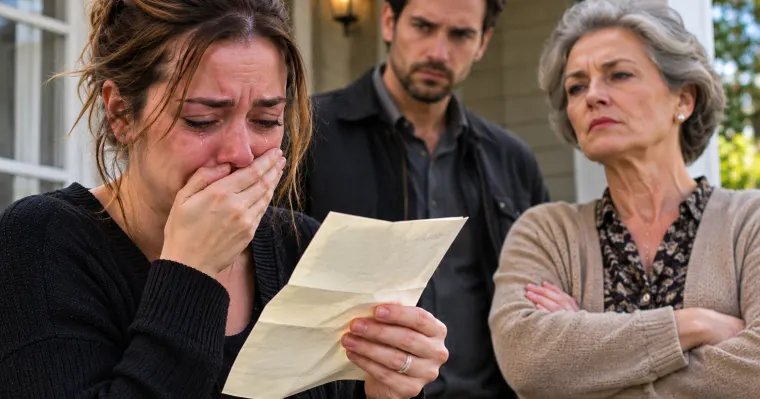
“Ma’am,” he said gently, “I buy a lot of watches. Most of them I clean up and put in the case. But this one, the back was sealed funny. Soldered. Somebody closed it on purpose, a long time ago.” He opened the velvet box. There, resting on white satin, was my father’s watch. The steel had been cleaned until it shone, the scarred glass polished, and the old cracked strap replaced with a new brown leather band that was almost the same color. I could not breathe. “I got curious,” Gus said. “I took a small tool and I opened the back.” He swallowed, and his throat moved visibly. “Ma’am, I think your husband left something inside it for you. And once I saw what it was, I knew I could not sell this watch. I had to find who it belonged to.” He nodded toward the man in the gray suit. “That is why I brought Mr. Hale. He is a lawyer. Because of what was written on the paper inside.” My mother stepped forward and took the velvet box from him with both hands, and her fingers shook so badly that the lid rattled. Gus reached into his shirt pocket and drew out a tiny square of folded paper, thin as tissue and yellow with age, creased so many times that it had gone soft at the edges. “It was folded six times to fit behind the movement,” he said. “The date on it is 1984.” My mother handed me the box. She took the paper, and she unfolded it one crease at a time, her lips moving as if she were counting. And when she read the first line, she sat down on the porch step, and the lawyer opened his briefcase.
THE STORY CONTINUES ON THE NEXT PAGE… 👇👇👇
This article is general information, not personal medical or financial advice. Talk to a qualified professional about your own situation.