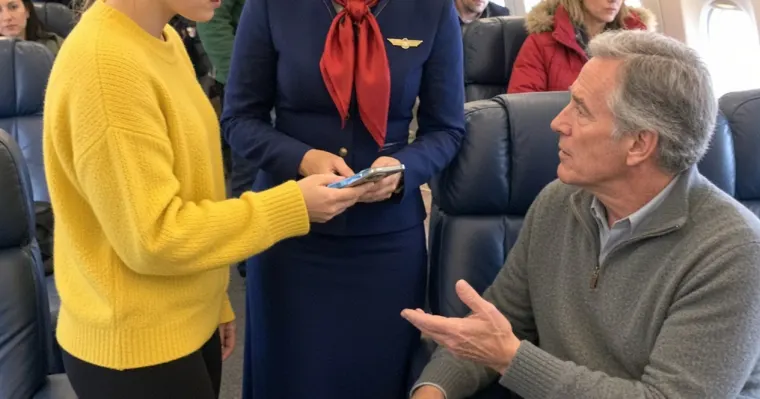
After My Son Asked Me Over Roast Chicken When I Was Finally Moving Out, I Quietly Folded My Napkin, Walked Outside, And Wrote Five Decisions In My Notebook That Nobody At That Table Saw Coming

My name is Evelyn Marsh. I am seventy-three years old, and for forty-one years I lived in a small adobe house on Arroyo Lane in the Northeast Heights of Albuquerque with my husband, Walter. He was a high school chemistry teacher, a tall, quiet man with ink on his fingers and a terrible singing voice, and every single morning of our marriage, he took his tea out to the front porch at six forty-five and drank it in the same green metal chair, watching the sun come up over the Sandia Mountains, before he left for work. When he retired, he kept doing it anyway. He said the mountains turned pink for him personally and it would be rude not to show up. Three years ago, in February, he went out to the porch with his tea and his heart simply stopped, and I found him there twenty minutes later with the cup still warm in his hand and the mountains glowing pink behind him. I have been learning ever since that grief is a strange teacher. It makes you grateful for anyone who offers to carry part of the weight. And it makes it very hard to notice when that offer begins to change shape. Our only son, Kevin, drove down from Santa Fe the morning after Walter died and stayed for a week. At the end of it, standing in my yellow kitchen, he told me I shouldn’t be living by myself anymore. He said, come stay with us, Mom. He said just until you’re feeling ready to be on your own again. I believed he meant it with his whole heart. I think, at the time, he did. So I did something I still sometimes wake up at night regretting. I sold the house. I sold the kitchen Walter painted bright yellow for me in 1987 because I said winter made me sad. I sold the rosebushes along the front wall, eleven of them, that I had pruned and fed and fussed over for thirty years. I sold the porch and the green metal chair. I walked away from four decades of memories and moved my life into the guest room of Kevin and his wife Courtney’s two-story stucco house on the south side of Santa Fe.
At first, they made me feel welcome. Courtney put fresh flowers in my room. Kevin hung my photographs. The grandchildren, Maddie, who was ten then, and Tyler, who was seven, climbed into my bed on Saturday mornings to hear stories about their grandfather. But slowly, so slowly that I could never have told you the day it changed, my place in that house began to shift. I started making the children’s school lunches, because I was up early anyway. I started picking them up from soccer practice on Tuesdays and Thursdays, because Courtney’s job at the hospital ran late. I started cooking dinner three nights a week, then four, because it seemed silly to sit in my room while everyone else was tired. I did the laundry, all of it, washing and folding and putting away. When Kevin and Courtney went away for a long weekend to Taos or Durango, which became more and more often, I stayed with the children. Nobody ever sat me down and handed me a list. Nobody asked. These things simply became my routine, one after another, until they were just the shape of my days. And here is the strange thing I learned. The more I did in that house, the less anyone seemed to see me. Courtney changed first. In the beginning, she would ask, almost shyly, if it would be all right for me to help with something. Within a year, it had become, can you handle this? And by the second year, the asking had disappeared altogether. She would walk past me in the kitchen and say, I need you to do this, already looking at her phone. Kevin changed too. He stopped saying thank you. Not all at once. Just less, and then less, and then never. He came home and ate the dinner I made and went upstairs, and he simply expected that the lunches would be packed and the laundry folded and the children collected, the way you expect the lights to come on when you flip the switch.
One afternoon last spring, I was carrying a basket of clean towels down the upstairs hallway when I heard Courtney’s voice through their half-open bedroom door. She said that my mother-in-law doesn’t pay a single penny to live here. I stopped where I was, holding the towels against my chest. She said, Kevin, we pay the mortgage, the bills, the food, everything. I stood very still in that hallway and waited for my son to answer her. I was so sure he would. I was sure he would remind her of the afternoons I spent with their children while they worked. The dinners. The laundry I was holding in my arms at that very moment. Everything I had taken off their shoulders without being asked. Instead, I heard him sigh. A long, tired sigh. And then he said, yeah, I know. That was all. He didn’t defend me. He didn’t mention a single thing I did. He simply agreed with her, the way you agree with a weather report. I set the towels down very quietly outside the linen closet and went to my room and sat on the edge of my bed for a long time. Those three words followed me everywhere after that. A few months later, Kevin and Courtney fell in love with a house. It was an old 1920s Craftsman on Juniper Hollow Road, on the east side of town near the foothills, a beautiful thing with four bedrooms and a deep, wide front porch with tapered columns and a swing, and enormous old cottonwood trees that threw cool shade across the whole yard. It was the kind of house where you could picture the Thanksgivings and the birthday parties before you ever held the keys. They talked about nothing else for weeks. The children argued at dinner over which upstairs bedroom would be whose. Courtney built color-coded spreadsheets on her laptop. Kevin sat up past midnight running mortgage calculations. They toured it four separate times. Twice, they took me along to watch the children in the yard while they walked through with the agent, and I sat on the porch swing alone in the shade of those cottonwoods, and for the first time in three years, I felt something in my chest that might have been peace. Then, before they could put together an offer, another buyer swooped in with an all-cash bid. The house was gone. For weeks afterward, it was all they talked about, the house they had lost.
And all that time, while they mourned a house, something extraordinary had happened in my life, and not one person in that household noticed. Four months before the dinner I am about to tell you about, I drove myself to a routine checkup with my cardiologist. On the way home, I stopped for gas at a station on Cerrillos Road. Inside, paying for a bottle of water, I saw the sign for the lottery jackpot, and for no reason I can explain except that Walter used to buy a ticket every Friday for forty years and never won more than twenty dollars, I bought one. Quick pick. I tucked it into my wallet and forgot about it. Two days later, sitting alone at Kevin’s kitchen counter while everyone was at work and school, I remembered it and looked up the numbers on my phone. I checked them once. Then I checked them again. Then I took out my reading glasses and checked them a third time. Every single number matched. Seventy-six million dollars. I didn’t scream. I didn’t jump up and down. I sat at that counter in the empty house, holding that little slip of paper in both hands, and stared at it for a very long time, and the only thing I could think was that I wished Walter were there so I could tell him. Then I did the most sensible thing I have ever done in my life. I called a lawyer. Then I called a second lawyer. Within a week, I had a small team of quiet, careful professionals helping me: an estate attorney, a tax specialist, a financial advisor who had worked with lottery winners before. They helped me claim the prize through a trust so my name would never appear in the papers. They helped me set up accounts and protections and a long-term plan. Almost all of our meetings happened over video calls in my bedroom with the door closed, while Kevin and Courtney were at work. My advisors gave me one piece of advice that I followed to the letter. They told me not to change anything about my daily life until every arrangement was finished. They said sudden wealth changes how people look at you, and that I should give myself time to decide who to tell, and when, and how. So I kept making the lunches. I kept driving to soccer practice. I kept cooking dinner and folding laundry. Envelopes started arriving in the mail for me, thick, cream-colored ones from my trust’s administrator, a company with a name I had chosen myself. They sat on the kitchen counter among the bills and the catalogs for days at a time. Kevin moved them aside to get to his own mail. He never asked what they were. No one suspected a thing.
Then came the night that changed everything. For months, Kevin and Courtney had been dropping hints, the way people do when they want to say something without having to be the ones who say it. They left a brochure for a senior living community called Sunset Ridge on the coffee table. They talked at dinner about how the children were getting bigger and needed more space. Courtney mentioned, more than once, how much I might enjoy living somewhere with people my own age. Every conversation seemed to circle back to the same place. And on a Tuesday evening in early October, they finally said it out loud. We were eating roast chicken with lemon and rosemary, which I had made. The children were unusually quiet. At exactly 6:42 p.m., I know because I glanced at the clock on the stove, Kevin set down his fork and pushed his chair back a few inches from the table. He said, Mom? I looked up. He glanced at Courtney, and she gave him a small nod, and then he looked back at me and asked, when are you finally going to find somewhere else to live? The table went completely silent. Maddie, thirteen now, set her fork down very carefully on her plate. Tyler, ten, kept staring at his food. Neither of them looked surprised. And that, somehow, was what hurt the most. Not Kevin’s words. Their faces. They had heard this conversation before, in rooms I wasn’t in. Everyone at that table had known this question was coming. Everyone except me. I picked up my napkin and folded it slowly, in half and then in half again. I laid it beside my plate. Then I stood up and said, excuse me. I didn’t argue with him. I didn’t ask him to explain himself. I would not let myself cry in front of them. I simply walked through the kitchen and out the sliding door onto the back patio. The New Mexico evening smelled of dry earth and the lawn sprinklers that had just shut off, and the sky over the Jemez Mountains was turning the same pink Walter used to wait for every morning. I sat down under the string lights Kevin had hung for a party years ago and took out the small leather notebook I keep in my cardigan pocket. And I wrote down five decisions. Find another place to live. Stay calm. Protect my newfound wealth. Buy a house for myself. Never forget how this night made me feel. The next morning, after everyone had left for work and school, I called my lawyer. Then I called a real estate agent. And Kevin and Courtney remained completely unaware of what I intended to do.
THE STORY CONTINUES ON THE NEXT PAGE… 👇👇👇
This article is general information, not personal medical or financial advice. Talk to a qualified professional about your own situation.