A Neighbor’s Boy Made Me One Small Promise Beneath Summer Skies Before Our Whole World Split Apart, And Decades Later A Stranger Quietly Sent Something Wrapped In Paper Across A City To Find Me Again2
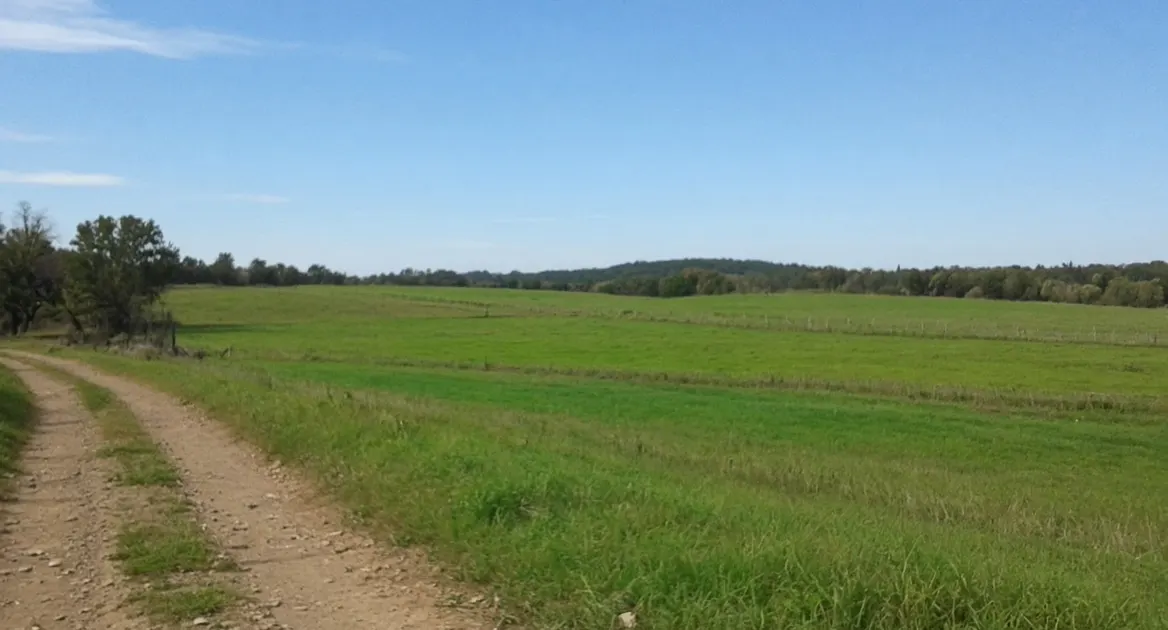
My name is Marketa, though almost nobody in Toronto has spoken it aloud in more than fifty years. The clerk who stamped our papers when the ship docked looked at the long, unfamiliar shape of it, sighed, and wrote Margaret on the form, and by the end of that first winter my classmates had worn it down into Maggie, which fit in the mouth of a child who was trying very hard not to be noticed. I answered to it for the rest of my life. I answered to it at the pharmacy counter, at parent meetings, at church suppers, and at my own husband’s bedside. But the name I was born with stayed folded somewhere inside me like a letter in a coat pocket, and it came out only in the dark, when I was half asleep and the house was quiet. I was born in Prague, in an old gray building with a courtyard in the middle and a tall stone wall at the back of the garden, and on the other side of that wall lived a boy named Tomas. He was one year older than me, thin as a fence post, with a cowlick that no amount of water could flatten and a way of tilting his head when he listened that made you feel you were saying something important. Our mothers had been friends since girlhood and shared a clothesline, a pot of coffee, and a running argument about whose plum tree dropped more fruit into the other’s yard. The tree stood right against the wall, so old that nobody remembered who had planted it, and its branches reached over both gardens as if it refused to take sides. That tree was the center of my whole small world.
Tomas and I did everything together, so naturally that I never thought to call it friendship. We walked to school each morning with our satchels bumping against our backs, and he carried my books when it rained because he said his coat was thicker. We traded stories the way other children traded marbles. He lent me an adventure novel about a boy who sailed a raft down a river, and I lent him my favorite book in the whole world, a blue clothbound collection of fairy tales with a gold fox stamped on the cover and my name written inside in pencil letters that wobbled uphill. He kept it for nearly a month, longer than any other loan, and when I asked for it back he said he was only on the last story and wanted to read it twice. On warm evenings we sat on top of that wall with our legs dangling, spitting plum pits into the flowerbeds, until my mother’s voice rose from the kitchen window and his mother’s answered from the other side, a long call and an echo, like two birds settling a boundary. We were nine and ten. We believed that summer evenings were a kind of permanent weather. And one afternoon in June, with the light going amber through the leaves and the air smelling of cut grass and warm fruit, Tomas stopped chewing on a blade of clover, turned toward me with a face so serious that I almost laughed before he spoke, and said that someday, when we were older, he was going to make me his wife. I did laugh. I laughed so hard that I nearly tipped off the wall. But when I saw that he was not laughing with me, I wiped my eyes and said, “All right. But you must remember what you said.” He lifted his chin. “I won’t forget,” he said. “That’s a promise.” And we sat there a while longer without talking, two small people who had just agreed to something much larger than either of us understood.
The year was 1939, and the world did not wait for children to grow up. I did not understand most of what changed in the spring. I knew that my father, a schoolteacher who sang while he shaved, stopped singing. I knew that the radio in our kitchen was turned low and then turned off whenever I came in, and that my mother started sewing coins into the hem of my winter coat while I slept. I knew that there were new men in the streets, in gray uniforms, standing at corners as if they had been planted there, and that the grown-ups on our staircase began speaking in the soft voices people use in a sickroom. One night my parents sat me down at the kitchen table, and my father took my hands in his, and he said that a cousin of his in Toronto had found a way to sponsor us, that we would have to leave Czechoslovakia within days if we wanted to survive, and that there was no time to explain, and no time to say goodbye. I asked about Tomas. My mother turned her face to the window. My father said gently that we could not tell anyone, because even a neighbor’s kind word could travel to the wrong ears, and that I would have to be braver than I had ever been. I remember nodding. I remember thinking that bravery would be easier if someone would just let me run to the wall. On the last evening, I slipped out to the garden and climbed to the top of it, and I waited under the plum tree with my heart going like a trapped bird. His window stayed dark. I learned much later that his family had gone to his grandmother’s village that week. I sat on that wall until my mother found me and lifted me down, and I left Prague the next morning with one suitcase, a wool coat heavy with hidden coins, and the quiet certainty that I had been robbed of something I could not name.
Toronto was a gray, cold, enormous place that smelled of coal smoke and wet wool, and for a long while I did not believe it was real. We lived in two rooms above a tailor’s shop, where my father, who had once taught poetry to thirty children at a time, learned to press other men’s trousers. My mother scrubbed floors in an office building downtown and came home each night with her hands cracked and red, and she never complained, not once, which frightened me more than any complaint could have. I learned English from comic strips and from the radio, and from a patient teacher named Miss Harding who kept a jar of peppermints in her desk for children who cried. I wrote letters to Tomas. I wrote them in Czech, in careful pencil, on pages torn from my school notebook, and my father found a way to address them through an old colleague, and I waited. Nothing came back. Not an answer, not a returned envelope, only a silence that grew more enormous each month. Then came the war, and with it the news, and the grown-ups stopped speaking Czech in front of me at all. After it ended, my mother wrote to the Red Cross, and she wrote to a church in a village she vaguely remembered, and she wrote to a cousin who had once lived near the river. Every reply was the same, a polite and bureaucratic regret. Whole families had vanished from those streets. Nobody could tell us what had become of the one next door. I stopped writing, because it seemed to me that continuing to hope for a single boy among so many gone was a kind of disrespect to the dead.
I built a life afterward, and it was a good one, and I want that said plainly. I married a gentle pharmacist named Peter Hollis, who wore bow ties on Sundays and kept a spare umbrella in every coat closet in case anyone he loved was caught in the rain. We had two children, Eva and Daniel, and later a house full of grandchildren who knew my kitchen the way I had once known that garden. I taught them to roll dumplings and to sing the lullabies my mother had sung, and I told them stories about Prague that grew softer and stranger each year, until even I could not tell where memory ended and invention began. The city of my childhood slowly turned into a dream, and Tomas became a figure in it, a boy on a wall with a cowlick and a serious face. Once, early in our marriage, I told Peter about the promise. He listened with his chin in his hand, and then he smiled and said that a man who kept a promise like that for a whole lifetime would be impossible to compete with, and lucky for him the boy was surely a grandfather now and had forgotten all about it. We both laughed. When Peter died, quietly, in his sleep, after forty-four years of marriage, I stood at his grave in a black wool coat and understood that I had reached the age when the people who knew my earliest name were almost all gone. I lived alone in the narrow brick house on Dufferin Street with the radio turned low, and I told myself that Tomas had been lost long ago, that the promise was a child’s game, and that a woman of my years had no business keeping a place in her heart for a boy who had never come back.
Then, on a damp evening in the autumn after my seventieth birthday, my granddaughter Clara let herself in through the kitchen door with rain on her shoulders and a small flat package in her hands. She is Eva’s daughter, twenty-six years old, with a quick laugh and her grandfather’s habit of apologizing to furniture, and she works at the downtown public library, shelving books and running a reading hour for children on Saturdays. She stood dripping on the mat with an odd, unsettled expression and said, “Grandma, the strangest thing happened at work today.” I put down my crossword and asked her what it was. She said that an older gentleman had approached the front desk that afternoon and asked her to deliver this to me. She held it out. It was wrapped in plain brown paper, tied with a length of twine, and it was heavier than it looked. I frowned. “How could a stranger know you are my granddaughter?” I asked. “I do not know,” she said. “But he asked me directly whether my grandmother’s name was Marketa.” The kettle clicked off behind me, and I did not move. It had been decades since anyone had addressed me by that name. Even my own children said Maggie, and my daughter had once told me that Marketa sounded like a character in a book. My heart began to beat against my ribs in a way I had not felt since I was a girl. “Did he introduce himself?” I asked. Clara shook her head. “No. He was tall, and a little stooped, with white hair and very pale eyes. He held his hat in both hands the whole time, like he was afraid to put it down. But he wanted me to pass along a message.” “What message?” I said, and my own voice sounded far away. Clara swallowed. She leaned close, and she whispered it, as though the words belonged to someone else and she was only carrying them across a room. “He said it is time for you to keep your promise.” My fingers started to shake so badly that I could not find the knot in the twine. Clara reached over and loosened it for me, and the brown paper fell open across my kitchen table like a door.
And when I finally saw what the elderly stranger had sent me, I was too stunned to utter a single word.
THE STORY CONTINUES ON THE NEXT PAGE… 👇👇👇
This article is general information, not personal medical or financial advice. Talk to a qualified professional about your own situation.