My Mom Charged Me 40 To Babysit Until I Learned What The Money Was Really For
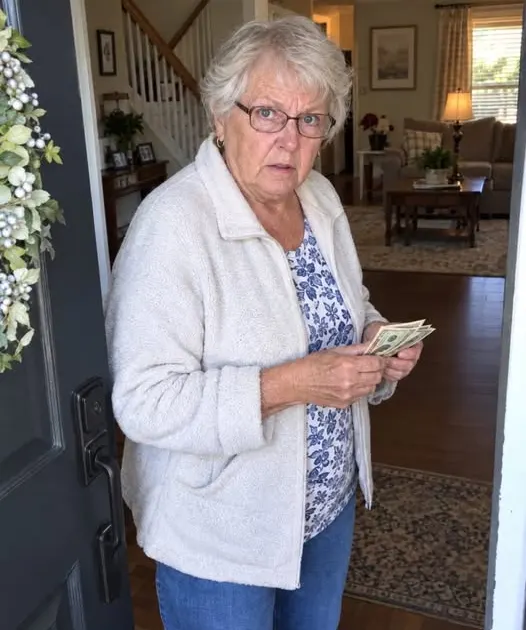
Of course they had. Of course my mother had come away from the worst waiting room of her life with a new friend and a phone number.
“After Noah died,” she said, “his family did something I’ve never forgotten. Instead of just, I don’t know, disappearing into their grief, which anyone would have understood, they started a small fund. Through the hospital. In his name. It helps other families going through what they went through. Not the medical bills, the hospital handles those. The other things. The gas. The parking. The hotel rooms. The meals. Pajamas and socks and toothbrushes for families who came in for an afternoon appointment and ended up staying two weeks with nothing but the clothes on their backs. All the invisible costs of having a sick child that break a family’s back while nobody’s looking.”
I picked up the brochure and read the front of it now. Noah’s name was there, in the title of the fund. A little boy in a red cape, made into something that outlasted him.
I set it down and looked at the envelopes. And then at my mother.
“So you’re donating the babysitting money,” I said. “That’s what this is. You’ve been collecting it and donating it to Noah’s fund.”
Also readThis photo is not edited. Look closer and try not to gasp when you see it the detail that has everyone talking, 30 years later 😳😱… See more 👇👇👇“Not exactly,” she said.
I waited.
“I’m matching it,” she said.
I frowned. “Matching it?”
“Every time you pay me forty dollars to watch Caleb,” she said, “I put in forty dollars of my own. From my own money. And both of them, yours and mine, they go to the fund. That’s why the total in the notebook is bigger than what you paid. It’s doubled. Every dollar you gave me, I doubled and sent on.”
My throat had gone tight. “But then why,” I said, “why make us pay at all? If you were going to match it anyway, if it’s your money doing the giving, why not just donate on your own? Why put me through this? Why let me get angry at you, let me think you’d turned into some cold woman charging admission to see her own grandson?”
And my mother looked genuinely uncomfortable for the first time all evening, shifting in her chair, and I understood that this, this was the part she’d been avoiding, the part that was hard to say.
“Because,” she said slowly, “I wanted it to be Caleb’s too. I wanted it to become Caleb’s money, not just mine.”
I stared at her. “Mom, that doesn’t make any sense. He’s seven. He doesn’t have money.”
“I know it sounds strange.”
“It sounds completely strange.”
She nodded, accepting that. Then she reached into the box one more time and pulled out a single sheet of paper. It was a simple chart, hand drawn, the kind of thing she used to make for household budgets when I was a kid. Columns and a rising line, tracking a total upward over the weeks.
And at the top, in her marker handwriting, it said: CALEB’S HELPING FUND.
I felt something shift in my chest, some structure I’d built out of two months of resentment quietly coming apart.
“When Caleb turns ten,” my mother said, “I want to tell him about it. About all of it. Sit him down and show him this box.”
“Tell him what?”
“That every single time he came to Grandma’s house,” she said, “every time he ate his dinosaur nuggets and drew a picture for the fridge and fell asleep under your old blue blanket, part of that day went out into the world and helped another family. A family with a sick little boy. That he was part of that, every time, without even knowing it. That his ordinary Tuesday afternoon at Grandma’s was also, somehow, quietly, a good thing for somebody he’ll never meet.”
I didn’t say anything. I couldn’t quite trust my voice.
“Not because he owed anybody anything,” she went on, quickly, like she needed to get it all out. “Not because you owed me, or he owed anyone, God knows. I just.” She struggled for the words. “I wanted him to grow up knowing that ordinary things can help somebody. That you don’t have to be rich, or special, or do something enormous. That a regular kid going to his grandmother’s house on a regular day can be part of something good in the world. I wanted him to have that in his bones before he’s even old enough to understand it. That being lucky isn’t something you just, sit on. That it can turn into something.”
I looked at all the envelopes again, all that money, my anger and her secret and my son’s name written over and over in black marker.
“Then why not just ask us to donate?” I said finally. “Ryan and me. Why not just come to us and say, hey, there’s this fund, it’s in memory of that little boy, will you give? We would have. Of course we would have.”
“Because,” my mother said, and there was something wry in her face now, “you would have said yes once.”
I almost laughed, because she wasn’t wrong, and she knew she wasn’t wrong.
“You’d have sent a hundred dollars,” she said. “You’d have felt good about it. You’d have gotten the little email receipt and felt like a good person, and then you’d have moved on with your life, and six months later you wouldn’t even have remembered doing it. Am I wrong?”
“Probably not,” I admitted.
“I didn’t want a one time hundred dollars,” she said. “I wanted something that kept going. Something built into our actual lives, into the ordinary rhythm of Caleb coming to my house. I wanted it to keep happening, over and over, for years, so that by the time Caleb’s old enough to understand it, it’ll be this big, real thing that he’s been part of his whole life without knowing.”
“Then why not tell me?” I said. “Why the secret? Why let me think—”
She looked down at the table. “Because I wanted to surprise you.”
I stared at her. “For two months, Mom? You wanted to surprise me for two months? You let me get furious at you. You let me stop bringing Caleb over. That was your idea of a surprise?”
She winced. “It worked much better in my head,” she said. “When I planned it out, it was going to be this lovely thing. You’d all find out at once, at the end, and it would be wonderful. I didn’t think about the part in the middle where you’d just think I’d lost my mind and turned mean.”
And that, finally, after two months of confusion and hurt and worry, actually made me laugh. A real laugh, the kind that comes up out of you all at once. Because it was so completely, perfectly her. She’d taken the most generous, tender impulse a person could have, and she’d wrapped it in such a bizarre and infuriating delivery mechanism that she’d nearly blown up her relationship with her own daughter over it.
My mother smiled, carefully, watching to see if it was safe.
And then I got serious again, because one thing was still nagging at me.
“But the wedding,” I said.
Her smile faded a little.
“The night of the wedding,” I said. “When you insisted, insisted, on getting the forty dollars right then, that night, at ten thirty, when I only had a hundred and a twenty. You made me hand over the hundred so you could give me back sixty in change. Why? Why did it have to be that exact night? You already knew you were just going to put it in an envelope.”
She nodded, and reached into the box, all the way to the bottom, and pulled out a small slip of paper. A receipt. She handed it across to me.
I looked at it. The date on it was the day after the wedding. A local grocery store. And the item, forty dollars, a gift card.
“I’d promised the hospital fund,” she said, “that I’d drop off a grocery gift card the next morning. They had a family that needed one right away, a family that was staying at the hospital that whole week and had no way to buy food. I’d committed to it. Forty dollars, a grocery card, first thing in the morning. And I didn’t have the cash on hand that night. I’d already sent everything else in. So when you came to pick up Caleb, I needed that forty dollars, that specific forty dollars, because I’d already promised it to somebody.”
I stared at the receipt.
“You could have just told me that,” I said quietly. “At the door. You could have said, Nora, there’s a family at the hospital who needs a grocery card in the morning, and I need this forty to buy it. I would have given you the whole hundred and told you to keep it.”
“I know.”
“You let me stand there,” I said, “with my sleeping son in my arms, thinking you were so obsessed with your babysitting fee that you couldn’t even wait until morning. You let me drive home furious. You let me decide that night that I was done, that I’d rather hire a stranger than deal with my own mother.”
Her eyes were filling now. “I know,” she said.
“I stopped bringing him here, Mom. For three weeks. I kept your grandson away from you for three weeks because I thought you cared more about forty dollars than about seeing him. Do you understand how much that hurt you? How pointless it all was?”
“I know,” she whispered. “I know I did.”
And that took the last of the humor out of it. Because it hadn’t just been a funny misunderstanding. It had cost something real. Three weeks. My mother sitting alone in a house full of Caleb’s drawings and Caleb’s pajamas and Caleb’s step stool, missing him, because of a secret she wouldn’t explain.
“Why didn’t you just tell me the truth,” I said, “the second you realized I was actually upset? The moment I stopped bringing him over? You knew why. You knew exactly why. Why did you let it go that far?”
She was quiet for a long moment. Then she said, “Because I was afraid that if I explained it, you’d feel guilty. And then you’d want to fix the guilt by paying more. You’d insist on giving me eighty instead of forty, or you’d start writing checks to the fund on top of it, and the whole thing would become this big obligation instead of a small steady thing woven into ordinary life. I didn’t want it to become a heavy thing you felt you had to do. I wanted it to stay light. So I kept quiet, and I told myself I’d explain when it was ready, and then it just, went on too long.”
I looked at her across the table, this woman who reused sandwich bags and made friends in waiting rooms and had somehow turned two months of my confusion into a memorial for a little boy in a red cape.
“Mom,” I said.
“I know,” she said.
“You created an entire crisis trying to prevent a completely different, much smaller crisis.”
She nodded slowly, and gave a small, rueful laugh. “That does sound like me, doesn’t it.”
“It really does,” I said. And unfortunately, it did.
Then something else occurred to me, and I looked up.
“Does Ryan know about any of this?”
“No,” she said. “You’re the first person I’ve told. The only person, besides Noah’s family and the people at the fund.”
“Good,” I said.
She looked surprised, maybe a little hurt. “Good?”
And I smiled. “Because I want to be the one to tell him.”
That night, I sat Ryan down at our own kitchen table after Caleb was asleep, and I told him the whole thing, from the beginning. The envelopes, the notebook, Noah, the cape, the grocery card, all of it. He didn’t interrupt me once. He just sat there and listened, his face doing a slow journey from confusion to disbelief to something softer.
When I finished, he was quiet for a moment. Then he said, “So let me get this straight. Your mother turned babysitting our son into a secret charity subscription.”
“Basically, yes.”
“And didn’t tell us.”
“Correct.”
“And then got offended and hurt when we canceled the service she never explained.”
“Also correct.”
He rubbed both hands down his face. “This family,” he said, “is exhausting.”
I laughed. I couldn’t help it.
Then he dropped his hands and asked, “How much is in the box? What’s the total?”
I told him the number.
He went quiet. And then he said, “Okay. That’s actually pretty great.”
“It is,” I said.
“It’s also completely insane.”
“Also yes.”
“Both things at the same time.”
“Welcome to my mother,” I said.
We decided, together, that we’d keep the forty dollar arrangement going. With exactly one change.
No more pretending. No more secret. Now we knew what it was, and we’d do it on purpose, with our eyes open.
The next time my mother watched Caleb, I handed her the forty dollars at the door, the same as always. But this time I said, “For the fund.” And she took it and smiled, and it wasn’t a transaction anymore. It was the opposite of a transaction. It was the least transactional forty dollars I’d ever spent in my life.
Ryan, standing beside me, then held out another twenty on top of it.
My mother immediately shook her head. “No.”
Ryan laughed. “Why not? Come on, Diane. Take the twenty. Match it, double it, whatever you do.”
“Forty is forty,” she said firmly.
“Mom,” I said.
“I’m serious. The number is forty. It’s always been forty. It stays forty. That’s the whole point. Small and steady. If we start upping it whenever we feel generous, it becomes a mood, and moods don’t last. Forty, every time, forever. That’s what makes it real.”
Ryan looked at me, holding his rejected twenty. “Now,” he said, “I understand where you get it.”
“Don’t start,” I told him.
A few months later, my mother changed the system again, in the best possible way.
She started letting Caleb help. Not with money, he was still far too young to understand the money. But with choosing what the fund’s donations bought.
The fund would put out word of what families needed that month. Sometimes it was gas cards. Sometimes grocery cards. Once, they needed pajamas and socks for families who’d come in for a quick appointment and ended up staying for weeks, with nothing but what they’d walked in wearing.
And my mother would sit Caleb down with the list and let him pick. She framed it as a game, a special job just for him. What should Grandma’s helping box buy this month?
That month, when they needed pajamas, my mother showed Caleb the options and asked him to choose.
He picked dinosaur pajamas. Obviously. Of course he did.
And somewhere out there, a scared kid in a hospital, far from home, got to sleep in a fresh pair of dinosaur pajamas because my seven year old chose them, without fully understanding why, at his grandmother’s kitchen table.
Caleb still doesn’t know the whole story. He’s seven. He couldn’t hold all of it yet, the little boy in the cape, the death, the two weeks of terror when he was three that he doesn’t even remember. That’s for when he’s ten, the way my mother planned. For now, he just knows that Grandma has a “helping box,” and that helping other families is a thing their family does, as ordinary and unremarkable to him as brushing his teeth.
Sometimes he puts his own spare change into the box. A few nickels from the bottom of his backpack. Once, solemnly, he added a small plastic dinosaur to the cash box, and my mother left it right there among the envelopes.
“Mom, that’s not money,” I told her when I saw it. “You can’t donate a plastic dinosaur to a hospital fund.”
“It’s a donation,” she said.
“A donation to whom?”
“Emotional support,” she said, without missing a beat.
I gave up.
Last week, my mother watched Caleb while Ryan and I went out to dinner. When we came to pick him up, I handed her the forty dollars, the same as always, and Caleb happened to be standing right there, pulling on his shoes.
He looked up and frowned. “Why do you give Grandma money?”
My mother and I looked at each other over his head. And for one second, I genuinely wondered if this was it, if the whole thing was about to unravel three years early, if we’d have to explain it all to a seven year old in the front hall.
Then my mother crouched down to his level and said, “Because sometimes grown ups make deals with each other.”
Caleb considered this seriously. “What kind of deal?”
She smiled. “The kind you’ll understand when you’re a little older. It’s a good deal. I promise.”
He shrugged, apparently satisfied, and went back to wrestling with his shoe.
On the drive home, Ryan said, “You know he’s going to figure it out before he’s ten. He’s too smart. He’s going to crack the case.”
“Probably,” I said.
“He’s got your mother’s curiosity. He interrogates everything.”
“That,” I said, “is genuinely terrifying.”
But here’s the part that actually changed something for me, the thing I keep coming back to.
At the very beginning, I’d been so furious because I thought my mother had taken something loving, watching her grandson, and turned it into something transactional. I thought the forty dollars meant that being with Caleb had become a job to her, a service she was charging for, that the warmth had somehow gone out of it and been replaced with a cash box.
But it was the exact opposite. She hadn’t made it transactional at all. She’d taken something she already loved doing more than almost anything in the world, and she’d found a way to let it spill over the edges of our family and become good for someone else too. She’d looked at her own luck, at the healthy grandson who got to walk out of that hospital, and instead of just feeling grateful and moving on, she’d figured out how to turn the luck into something that kept giving, forty dollars at a time.
Her execution was, and I have told her this many, many times, absolutely terrible. She nearly torpedoed her relationship with her daughter and lost three weeks with her grandson over it. She agrees. Mostly. She maintains that it would have been a lovely surprise if I’d just been a little more patient, which is not entirely fair, and we go around about it happily.
But the idea. The idea was not terrible at all. The idea was one of the most quietly beautiful things I’ve ever known anyone to do.
A few weeks ago, she showed me the latest total in the notebook. It’s grown a lot.
I stared at the number. “Mom. That’s a lot of money.”
She nodded, pleased. “Almost enough to cover a full month of hotel assistance for one family. A whole month of a mother getting to sleep near her sick child instead of driving home alone every night.”
I looked at her. “You know,” I said, “you could just set up a monthly donation online. Automatic. You’d never have to think about it. I could show you how in five minutes. You wouldn’t have to make me drive to an ATM for cash every single time.”
She smiled at me, that particular smile she gets when she thinks she’s about to win an argument.
“But then you’d forget,” she said.
“Forget what?”
“You’d forget it was happening. It would just be a number leaving an account. You’d never think about it again.” She reached over and tapped the cash box. “This way, every single time, you have to reach into your wallet, and count out the money, and put it in my hand, and think about where it’s going. Every time. You don’t get to forget. That’s the whole point. It’s not supposed to be automatic. It’s supposed to be felt.”
“That’s ridiculous,” I said.
“It’s completely ridiculous,” she agreed. “And I’m right, and you know I’m right.”
And, unfortunately, I did.
Then she closed the lid of the cash box. And I noticed, on the top of it, a sticker Caleb had recently added. A cartoon dinosaur wearing sunglasses, looking very pleased with himself.
And underneath the sticker, my mother had written, in her marker, the same words that were on the chart inside.
CALEB’S HELPING FUND.
And then, in smaller letters below that, she’d added a line I hadn’t seen before.
Forty dollars at a time.
I used to think that forty dollars was what my mother charged to watch my son. That it was a fee. A price. A transaction I resented having to pay.
It wasn’t any of those things.
It was what she used, quietly and stubbornly and forty dollars at a time, to teach all three of us, me and Ryan and someday Caleb, something she’d figured out in the worst waiting room of her life, sitting next to a woman whose grandson was dying.
That being lucky shouldn’t end with being grateful.
That sometimes, if you’re willing to build it into the ordinary days on purpose, it can turn into something useful instead.
This article is general information, not personal medical or financial advice. Talk to a qualified professional about your own situation.