My military husband passed away two weeks ago. When I visited his grave today, I saw coins on his gravestone. What is the meaning behind the coins? Why would someone leave them there? It really scared me!
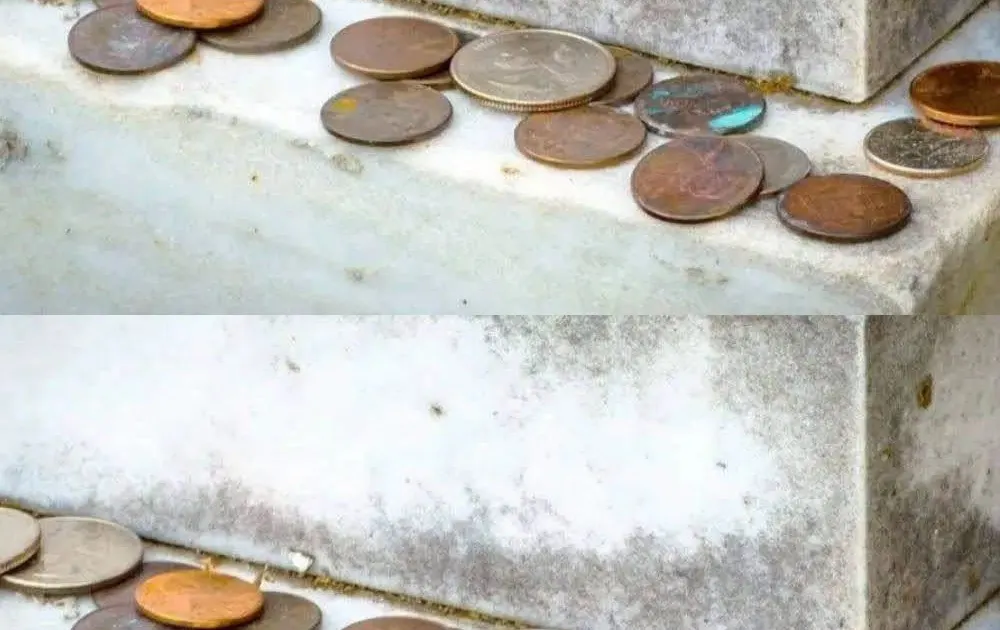
Pennies: “I Remember You”
Pennies: that’s probably the most common. And easiest. If you place a penny on the gravestone, you do it for the sake of saying “I was here.” Your presence was known. You read the name, You recognized a life. You may not have know the deceased-whomever they are-but their not forgotten, Just small. Well, I guess. But it does. And for families. All the one cent has given them- families of the fallen- gives them peace. Someone came, Someone was here, Someone remembered.
Nickel- that’s a saving-grace layer. A nickel means you came from boot camp besides. They had a boot camp experience. They probably laughed about how stupid were to cut down on running. Probably got each other sick out from both whiners chow lines and slept in the same porches. Maybe they might’ve even buried their boot camp experience of strength right in the red clay. Maybe even found a fear or anxiety, a common apprehension about a burdensome 2 minutes that was taught to them by design.
They’re were service members next to each other, and they were service members- on formation day, before medals, before losses.
Dime: “We Fought Side by Side”
A dime is more personal. A dime means we served together – we didn’t just train. They were deployed, and maybe fought side by side. Perhaps the same truck, maybe the same mission, maybe the same foxhole. This is a deeply personal memory because it is a deeply personal bond. A bond created by stress, pathos, and survival.
It is an expression of meaning, it is like saying: “Maybe I did what you did. I stood at your side. I saw what you saw.”
Quarter: “I Was There When You Died”
And what about the quarter? This is heavier. If someone leaves a quarter on a gravestone it means they were there when the soldier died. They saw it. Or they held a hand. Maybe they tried to save them. Or maybe they couldn’t.
That coin says, “I was with you at the end.” It says that quietly. Heavily. And in some ways, it may be the most intimate gesture a person can leave behind without saying a word.
It’s a Language of Grief, and Respect.
The beauty of the tradition is how unspoken it is. There is no ceremony, no formal rule book. You do not have to check in or fill out a form. You do not even have to leave your name. But if you know, you know. And once you know, the next time you see a coin on a grave—particularly in one of the military cemeteries—you cannot walk past it.
This article is general information, not personal medical or financial advice. Talk to a qualified professional about your own situation.