My Husband’s Aunt Knew What His Parents Hid About the Farmhouse
At Christmas, my husband’s parents gave his brother and sister keys to new cars, then handed Merrill and me a gas card. “You two never need anything,” his mother, June, said. I thanked her. Two years later, we bought a rundown farmhouse at a tax sale, and Merrill’s 93-year-old aunt asked me to drive her out there. In the kitchen, she put her hand on the pantry door.
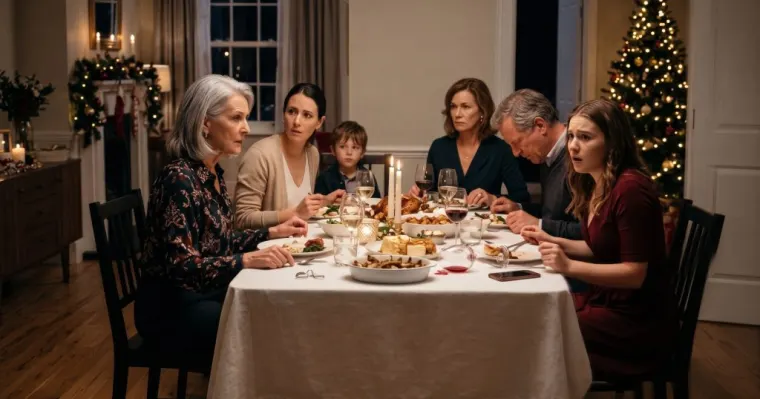
Christmas at my in-laws’ was always the same. Ham, green bean casserole, and stockings hung in order by age. That year, after supper, June clapped her hands and said she and Merrill’s father, Martin, had a little something for everybody.
Merrill’s brother reached into his stocking and pulled out car keys tied with a red bow. His sister found a set of her own. We all went to the window. Two brand-new SUVs sat in the driveway, one silver and one white.
His sister started crying. His brother picked June up and spun her around, and she laughed so hard she had to hold on to his shoulder.
Then June handed Merrill a small envelope. Inside was a greeting card with a cardinal on it and a $25 gas card. I looked in the envelope twice, as if something else might have been tucked behind the card. It wasn’t.
Also readMy Father Said My Grandmother’s Savings Book Meant Nothing—Until the Bank Uncovered a Hidden SecretJune had written that we always managed so well on our own and nobody ever worried about us.
“You two never need anything,” she said out loud, smiling. “We’re so proud of you.”
Merrill read the card and slid it into his shirt pocket. His ears went red. They’ve gone red when he’s hurt since he was five years old.
Martin raised his coffee cup. “Take it as a compliment, son. You’ve done fine without help.”
I wish I’d said something smart. I didn’t. June had been cooking since six that morning, and I thanked her because it was easier than admitting how that envelope had made me feel.
On the drive home, Merrill didn’t turn on the radio. At the stop sign by the feed store, he finally asked how much we had saved. I told him a little over $4,000.
He nodded. “Then we’ll get more.”
And we did. I’d retired from the front desk at the dentist, but I started cleaning houses on Saturdays. Merrill fixed lawn mowers in the shed after his shift. He sold his bass boat, which about broke his heart. I made pinto beans and cornbread so many nights I could do both without looking at the recipe.
We didn’t tell anybody what we were saving for. I didn’t want it to look like we were asking the family for money. That was partly pride and partly fear of hearing, again, that we were doing just fine.
Two springs later, the county put an old farmhouse up for back taxes. It sat on a ridge past the old schoolhouse, empty for more than twenty years. The porch sagged, the windows were cracked, and the weeds came up past my waist.
Merrill walked around it twice with his hands in his pockets.
“The bones are good,” he said.
“Honey, the bones are about all it’s got,” I told him.
The sale was on the courthouse steps on a windy Tuesday. A man in a golf shirt from out of town kept bidding against us. Each time Merrill raised his hand, the man raised his. We got right up to the last dollar we had.
Merrill lifted his hand one more time, barely above his waist. The man looked at him, shrugged, and walked off to his car.
“Sold,” the clerk said.
I paid with a cashier’s check and an envelope of cash from my cleaning money. The clerk counted it twice, then handed me a ring of rusty old keys. I closed my fist around them before I could start shaking.
We still didn’t tell anybody. Merrill rewired the house room by room after work. I scraped wallpaper until my thumbs split open, then put Band-Aids on them and kept scraping. I was 65, and I’d forgotten I could work that hard.
The sale appeared in the newspaper’s legal notices. Most people don’t read those, but Merrill’s Aunt Leatrice read every word with a magnifying glass.
She called me at home on a Thursday night.
“Violet, you bought the old place on the ridge,” she said. “Don’t you lie to me.”
“Yes, ma’am,” I said.
“You pick me up after church Sunday,” she told me. “And don’t you tell my brother.”
Then she hung up. I stood there holding the phone, wondering what in the world I’d stepped in.
On Sunday, I picked her up in her navy dress and her good brooch.
She held her purse in her lap and looked out at the fields all the way there. She didn’t ask about the house or the sale.
When we pulled up, she opened her own door.
“I don’t need your arm,” she said. “I know these steps.”
I followed her over the sagging porch. She crossed the front room, passed the stairs, and went through the dining room into the kitchen. Merrill had just hung a bare bulb from the ceiling. Leatrice stopped in the middle of the floor, then walked to the pantry door and laid her hand on the old wood frame.
Little notches ran up the side, with initials beside them. Her shoulders started shaking. She didn’t make a sound. I stepped closer and read the initials by the lowest notch.
They were “L” and “M.”
Leatrice pressed her thumb against the “L.” “That’s me,” she said. Then she touched the “M.” “That’s my little brother. Merrill’s father.”
THE STORY CONTINUES ON THE NEXT PAGE… 👇👇👇
This article is general information, not personal medical or financial advice. Talk to a qualified professional about your own situation.