Many public restrooms feature the sign “WC,” yet surprisingly, very few people actually know what it stands for…!!
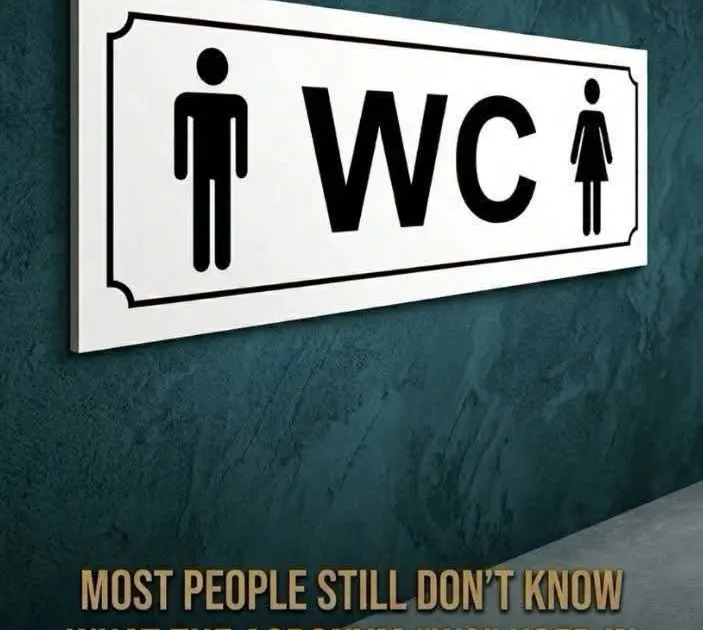
Today, toilets are an ordinary part of daily life, but their development took centuries. Ancient civilizations created pits, drainage channels, and communal latrines to manage human waste. These early systems laid the groundwork for modern sanitation, although their effectiveness varied considerably.
Ancient communities in the Indus Valley, including Harappa and Mohenjo-daro, developed drainage infrastructure and household sanitation features. The Romans later became famous for their aqueducts, public baths, and communal toilets. These facilities helped incorporate sanitation into urban planning, even though they lacked many hygiene protections found in modern restrooms.
During medieval times, sanitation depended heavily on location and wealth. Many households used chamber pots, which had to be emptied manually. Outdoor privies were also common, while some castles incorporated toilets connected to openings or drainage systems. Waste disposal remained a challenge, particularly where proper drainage was unavailable.
A significant milestone came around 1596, when English courtier Sir John Harrington developed an early flushing toilet known as a “water closet.” Harrington, who was Queen Elizabeth I’s godson, installed a prototype at Richmond Palace. However, the invention did not become widespread because plumbing infrastructure was limited and installation was expensive.
THE STORY CONTINUES ON THE NEXT PAGE… 👇👇👇
This article is general information, not personal medical or financial advice. Talk to a qualified professional about your own situation.